

Attic Condensation or a Roof Leak? What Charlotte Homeowners Can Check This November
Posted 11.05.26 | 6 Minute Read

You find a wet spot in the attic. The last rain was two days ago, but last night was cold. Should you call about a roof leak? The timing is worth noting. Charlotte Douglas International Airport’s 1991–2020 climate normals show a November average daily low of 39.8°F and 3.31 inches of precipitation for the month. Cool nights and rain can both leave moisture in an attic, for different reasons. NOAA’s Charlotte climate summary
Cold, dry night? Look for a pattern across the attic
Think of the water that beads on the outside of a cold glass. Something similar can happen when warm, moist indoor air gets into a colder attic and meets the underside of the roof. Small droplets on the wood beneath the shingles, or frost across several areas during a cold snap, can point to condensation. If frost thaws later in the day, water can drip onto the insulation even when it’s dry outside. U.S. Department of Energy’s guide to cold-weather attic condensation
Make a note if a bathroom fan seems to exhaust into the attic. The fan should carry moist air outdoors. In a vented attic, a professional can also look for gaps around the attic hatch or other ceiling openings and check whether insulation blocks the vents under the eaves. The right fix depends on how the attic was built. EPA guidance on controlling indoor moisture
Spot gets darker after rain? Note where the water shows up
A stain that grows in the same place during or after rain can point to water entering from outside. Note whether the wet area is near a chimney, skylight or plumbing vent. Those features depend on flashing, the material that directs water away from roof joints and openings. Water can travel along wood framing before it drips, so the stain gives a roofer a place to start. For more clues, see our guide to hidden roof leaks in Charlotte.
Compare what happens on a cold morning and after rain
If you’ve found an old stain and everything is dry, take a baseline photo now. On the next cold, dry morning, check the same spot from the attic hatch if you can do so safely. Look at the nearby wood as well. Fresh droplets on several pieces of framing or on the underside of the roof are worth photographing before the attic warms up.
After the next rain, check the same location. A single wet track or a stain that grows after wind-driven rain gives a roofer a place to start. Tell them whether the rain came with strong winds and whether the stain is near an outside wall, skylight or chimney. If moisture is already active or spreading, call promptly and share the observations you already have.
Check what changed inside the house
Think back to any work that happened before you first noticed moisture. A new bathroom fan, extra insulation or work around the attic hatch can change how moist air moves through the house. Run the bathroom fan while showering and check whether the outlet is easy to identify from the ground. If you can’t tell where the duct ends, make a note for the person inspecting the attic.
Some Charlotte homes have insulation on the attic floor, while others have insulation along the roofline. This difference affects how the space is supposed to manage moisture. Tell your inspector if you have spray foam or if the attic was recently finished. Have them identify how your attic was built before making changes to the vents or insulation.
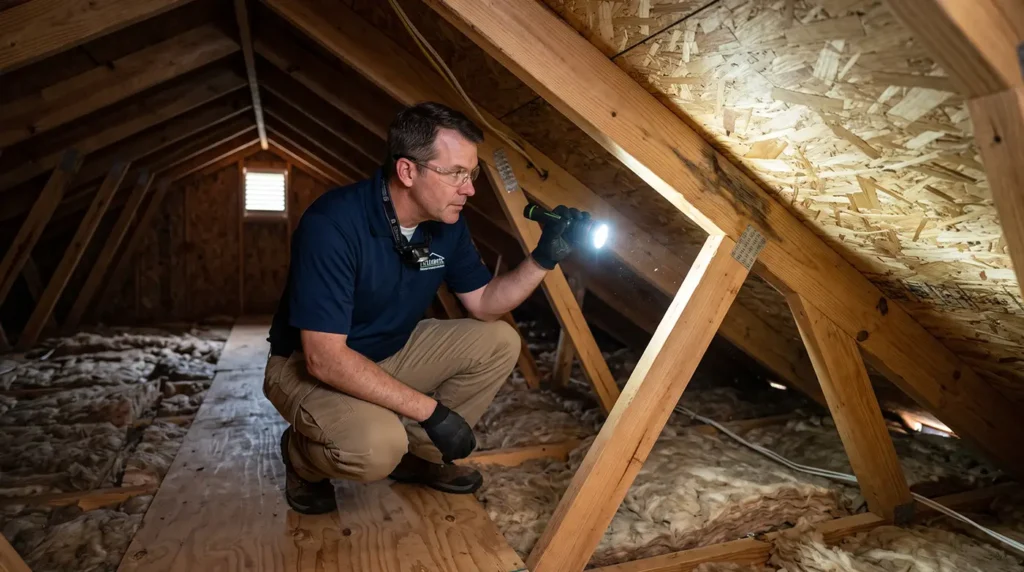
Take two photos and write down the weather
If you can see the affected area safely from the attic hatch or a finished walkway, take one wide photo to show the location and one closer photo of the stain or droplets. Otherwise, photograph what you can see from the room below. Stay off the roof and keep clear of wet wiring and fixtures.
Record the date, whether it rained recently, and whether you saw one wet spot or droplets across several areas. If you first noticed a stain after a dry night, that detail is worth passing along even if the stain looks dry by the time someone comes out. Timing and location are clues, and condensation and a rain leak can occur in the same attic.
What an inspection can tell you
Share your photos and weather notes when you make the appointment. If the symptoms follow rain, a roofer can look at the shingles, flashing and roof openings uphill from the wet spot and compare those findings with any visible water trails inside. If the evidence points to moisture coming from the house, ask whether the bathroom exhaust, ceiling air leaks or attic ventilation need a closer look. An insulation or HVAC professional may be the next call, depending on what the roofer finds.
When to schedule a roof inspection
Call promptly for active dripping, wet insulation or a stain that keeps growing or coming back. A roof inspection can help determine whether rain is entering around flashing or another roof detail. If the pattern points to condensation, the next step may be to have a qualified professional evaluate bathroom exhaust, air leaks between the house and attic, and the attic’s ventilation.
Great State Roofing offers free roof inspections in Charlotte. Call 704-389-9985 or request an inspection through our Charlotte residential roofing page.
Frequently Asked Questions
Can attic condensation cause a ceiling stain?
Yes. Droplets can collect on cold wood and drip onto insulation or ceiling materials. A photo taken when the area is wet, along with the weather that day, can help distinguish condensation from rainwater.
Why does the attic look dry by the time someone comes out?
Small droplets can evaporate as the attic warms up, and a rain leak may dry between storms. A dated photo of the wet area often gives an inspector more to work with than a dry stain alone.
Will adding another roof vent solve attic condensation?
It depends on the attic. In a vented attic, blocked intake vents or gaps that let moist air rise from the house may need attention. A professional can assess the design and airflow before recommending new vents.
Can I tell whether I need a new roof by looking at the stain?
A stain shows where moisture appeared. The repair depends on where it came from and what condition the roof is in. An isolated flashing problem may call for a focused roof repair. Moisture from a bathroom fan venting into the attic calls for a different fix.




Very professional. Quality work. I would highly recommend for any roofing needs.

Matt V

