

Do I Need Commercial Gutter Repair? (7 Signs Your System Needs Help)
Posted 4.09.26 | 11 Minute Read
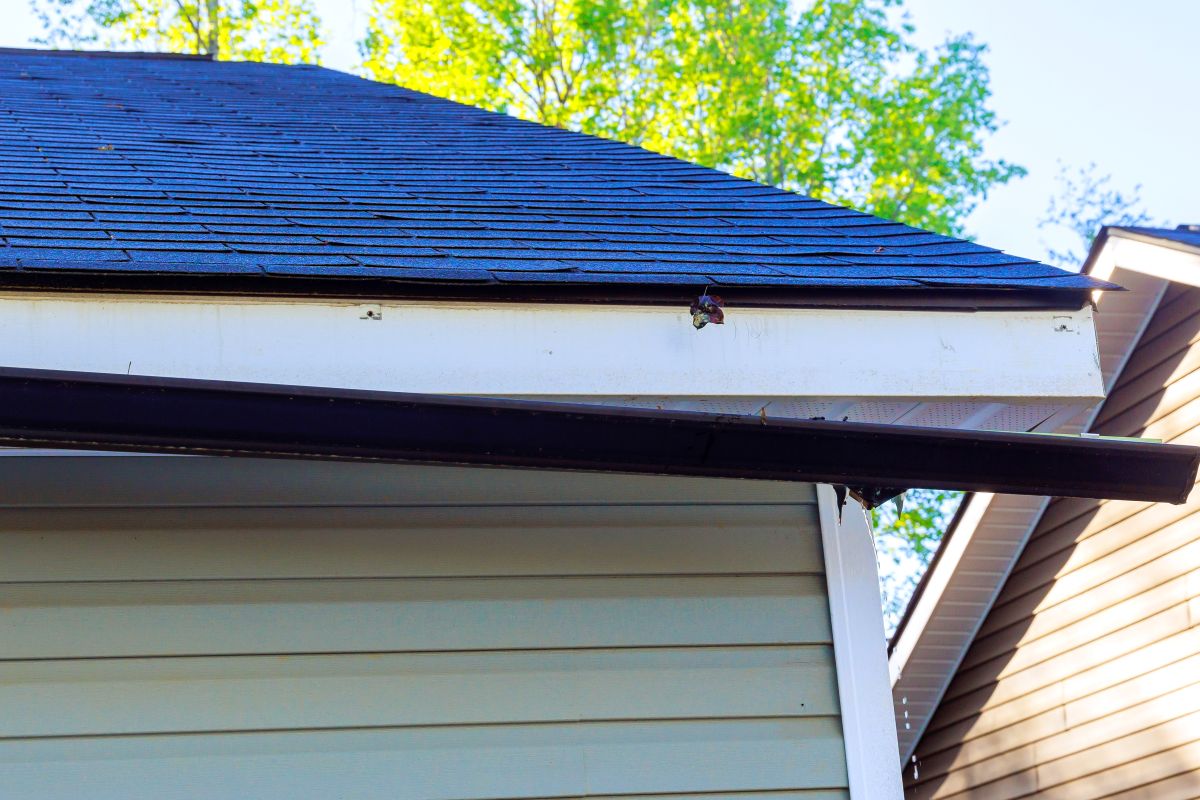
Your gutters do a quiet but critical job every single day. When they start failing, the damage rarely stays isolated to the gutter itself. Water gets redirected toward your foundation, your fascia rots, and your interior walls start absorbing moisture that was never supposed to reach them. Commercial gutter repair is one of those maintenance items that is easy to delay but expensive to ignore. If you own or manage a commercial property in Huntersville and surrounding areas, understanding how your building’s drainage connects to your roof system is the first step toward preventing serious structural damage.
Here is what you will learn in this guide:
- The most common warning signs that your commercial gutters need attention
- Why gutter problems escalate quickly on commercial properties
- The difference between repair and full replacement
- How gutter health connects to your overall roofing system
- What to expect when you hire a professional for commercial gutter work
- Tips for preventing recurring issues through routine maintenance
The Real Cost of Ignoring Gutter Problems

Commercial gutters handle an enormous volume of water. A single inch of rain falling on a 10,000 square foot roof generates over 6,000 gallons of runoff. When your gutter system is compromised, even partially, that water has to go somewhere. It often ends up somewhere it should not.
The financial consequences of deferred gutter maintenance tend to compound over time. What begins as a minor sag or a slow leak at a joint can quietly cause thousands of dollars in damage to fascia boards, soffits, exterior walls, and even the building’s foundation before anyone notices something is wrong.
Here is why addressing gutter problems promptly protects your property:
- Foundation protection: Water that pours over or behind a failing gutter saturates the soil around your building’s foundation, increasing hydrostatic pressure and the risk of basement or crawlspace flooding.
- Fascia and soffit preservation: These wood components are directly behind and below your gutters. When gutters pull away or overflow repeatedly, this wood becomes saturated, rots, and eventually requires full replacement at significant cost.
- Roof membrane longevity: Standing water at roof edges caused by blocked or damaged gutters accelerates deterioration of roofing materials, particularly at the drip edge and lower membrane zones.
- Interior damage prevention: Water that finds its way into wall cavities through compromised exterior components creates conditions for mold growth, insulation damage, and drywall failure.
- Liability reduction: For businesses with tenants, customers, or employees entering and exiting the building, ice that forms from overflowing gutters in winter creates a slip-and-fall liability that is entirely preventable.
7 Signs Your Commercial Gutters Need Repair
Gutter problems rarely announce themselves with a dramatic failure. More often, the signs are subtle at first and become harder to ignore over time. Knowing what to look for allows you to act before minor issues become major expenses.
1. Visible Sagging or Pulling Away from the Fascia
When gutters begin to separate from the roofline, it is usually because the hangers or spikes that secure them have failed. On commercial buildings, this is often the result of accumulated debris adding weight over time or corrosion breaking down the fasteners. A sagging gutter cannot effectively direct water and will eventually tear away entirely if not addressed.
Additional signs connected to this issue:
- Gaps between the gutter and the fascia board
- Visible daylight between the back of the gutter and the roofline
- Rust or staining on the fascia where the gutter has been pulling away
2. Water Overflowing During Rain Events
Gutters that overflow during rainfall are not necessarily clogged. Overflow can also indicate that the gutter is improperly pitched, undersized for the roof area it serves, or that downspouts are blocked and not allowing water to exit. On larger commercial roofs in Huntersville and surrounding areas, undersized drainage is a more common culprit than most property owners realize.
When diagnosing overflow:
- Watch your gutters during a moderate rain event to see exactly where overflow is occurring
- Check downspout outlets at ground level for blockages
- Look for areas where the gutter has settled out of its proper slope
3. Standing Water or Pooling Inside the Gutter
After rain stops, gutters should drain completely within a few hours. If you notice standing water sitting in your gutters for extended periods, it means either the pitch has shifted or there is a blockage preventing drainage. Standing water accelerates corrosion in metal gutters and creates an ideal environment for mosquito breeding and organic debris buildup.
4. Cracks, Holes, or Rust Spots

Physical damage to the gutter body itself is one of the clearer indicators that repair or replacement is needed. Cracks and holes in sectional gutters allow water to exit the system before it reaches the downspout, directing it straight toward the fascia and foundation below. Rust spots are a sign that the protective coating has failed and the metal is actively deteriorating.
Key distinctions:
- Small holes and isolated cracks in an otherwise sound gutter can often be sealed with roofing sealant or gutter patching material
- Widespread rust or multiple failure points typically indicate the section or full run needs replacement
- Seam separations on sectional gutters are common and often repairable, while seam failures on newer seamless systems point to improper installation or significant movement
5. Peeling Paint or Staining on Exterior Walls
Water that repeatedly escapes a failing gutter leaves evidence on the walls below. If you notice streaking, discoloration, peeling paint, or dark staining on your building’s exterior in a vertical pattern below a gutter run, that gutter is almost certainly leaking or overflowing at that location. In Huntersville and surrounding areas, where summer storms can be intense and frequent, this kind of visible water damage accumulates faster than most people expect.
6. Eroded Landscaping or Soil Displacement Below Downspouts
When downspouts are improperly directed or discharge too close to the building, the force of concentrated water flow erodes surrounding soil and landscaping. Over time, this can undercut sidewalks, create uneven grade conditions that direct water toward the foundation, and wash away mulch or ground cover. If you notice trenching or significant erosion beneath your downspout exits, the drainage system needs attention.
7. Mold, Mildew, or Water Damage Near the Roofline
Mold or mildew growth on the exterior of your building near the roofline, on the soffit, or on interior walls adjacent to exterior corners is often a delayed indicator of a gutter problem that has been present for some time. Water that has been quietly infiltrating the structure through a failing gutter system will eventually create the sustained moisture conditions that mold requires. Addressing only the mold without fixing the underlying gutter issue will result in the problem returning.
Repair vs. Replacement: How to Know Which One You Need
One of the most common questions commercial property owners have is whether their gutters need to be repaired or replaced entirely. The answer depends on several factors, and understanding them can help you have a more informed conversation with your contractor.
When Repair Is the Right Call
Repair makes sense when the damage is isolated and the rest of the gutter system is structurally sound. Common repair scenarios include:
- Single section leaks: A cracked seam or small hole in an otherwise intact gutter run can be patched without replacing the full system.
- Loose or failed hangers: Re-securing gutters to the fascia with new hangers or hidden bracket systems is a relatively simple repair that restores proper alignment.
- Downspout blockages or damage: A cracked or disconnected downspout segment can be replaced independently without touching the gutter itself.
- Minor pitch correction: If a section of gutter has settled out of its proper slope, it can often be re-pitched by adjusting the hangers without full removal.
When Replacement Makes More Sense
Full replacement becomes the practical choice when:
- The gutter is more than 20 years old and showing widespread corrosion or fatigue
- Multiple sections have failed or are failing simultaneously
- The system was undersized for the building’s roof area and has never drained properly
- The fascia behind the gutter is so deteriorated that re-hanging would not hold securely
- The building owner wants to upgrade from sectional to seamless gutters to reduce future maintenance
Seamless gutters, which are fabricated on-site to fit the exact dimensions of each run, eliminate the seam joints that are the most common failure points in sectional systems. For commercial properties with larger roof areas and higher water volume, the investment in seamless systems tends to pay off quickly in reduced maintenance calls.
What Professional Commercial Gutter Service Looks Like
Understanding what to expect from a professional gutter inspection and repair helps property owners evaluate contractors and set realistic expectations for the process.
A thorough commercial gutter assessment should include a full visual inspection of the gutter body, hangers, seams, downspouts, and discharge points. The contractor should check the pitch along each run using a level, examine the fascia behind each gutter section for rot or structural compromise, and clear any existing debris before making a full evaluation.
From there, a written assessment should clearly distinguish between items that can be repaired, items that should be replaced, and items that represent future risk if left unaddressed. Any contractor who quotes full replacement without explaining why repair is insufficient is not giving you the full picture.
For commercial properties in Huntersville and surrounding areas, gutter work should also be evaluated in the context of the overall roofing system. Gutters that drain onto a lower roof section before exiting the building need to be coordinated with the condition of those lower roof areas to ensure the full drainage path is functioning correctly.
After the work is complete, a quality contractor will flush each gutter run with water to confirm proper drainage, inspect all repaired areas under simulated rain conditions, and provide documentation of what was done and what was observed during the inspection.
Maintenance Practices That Extend the Life of Your Gutter System

Reactive repairs are often more expensive and more disruptive than preventive maintenance. Building a basic gutter maintenance routine into your commercial property management plan significantly reduces the likelihood of emergency repairs and extends the functional life of the system.
Schedule at least two cleanings per year. For most commercial properties, a late spring cleaning after pollen and seed season and a late fall cleaning after leaf drop covers the most significant debris accumulation cycles. Properties with significant tree cover nearby may need quarterly attention.
Inspect after major storm events. High winds can deposit debris into gutters rapidly and can also dislodge hangers or displace downspout connections. A quick visual check after any storm with winds over 40 mph takes minutes and can catch problems before they become serious.
Keep records of all maintenance and repairs. Documentation helps you track recurring problem areas, provides evidence for insurance claims if water damage occurs, and gives any contractor who works on the building a clear picture of its history.
Address small repairs immediately. A single loose hanger or a minor seam gap is a quick fix when caught early. Left unaddressed through a winter or a rainy season, it becomes a much larger problem. The cost difference between sealing a small seam and replacing a full fascia board is significant.
Evaluate your downspout discharge points annually. Ground-level discharge should direct water at least six feet away from the building’s foundation. Extensions, splash blocks, and underground drainage connections should all be checked to confirm they are intact and functioning.
Don’t Let a Small Gutter Problem Become a Big Repair Bill
Gutters are not glamorous. They rarely get the attention that roofing systems do. But they are doing some of the most important work on your building every time it rains, and when they fail, the consequences move fast and spread wide.
If you have noticed any of the warning signs covered in this guide, or if it has simply been a while since anyone took a close look at your commercial drainage system, now is the right time to act. At Great State Roofing, we bring the same commitment to quality and precision to gutter work that we bring to every roofing project. We know what failing gutters can do to a commercial property, and we know how to fix the problem the right way the first time.
Reach out and contact us today to schedule a professional inspection and find out exactly where your gutter system stands.



Very professional. Quality work. I would highly recommend for any roofing needs.

Matt V

