
PVDF Coating (7 Benefits for Long-Lasting Metal Roofs in 2026)
Posted 4.30.26 | 12 Minute Read
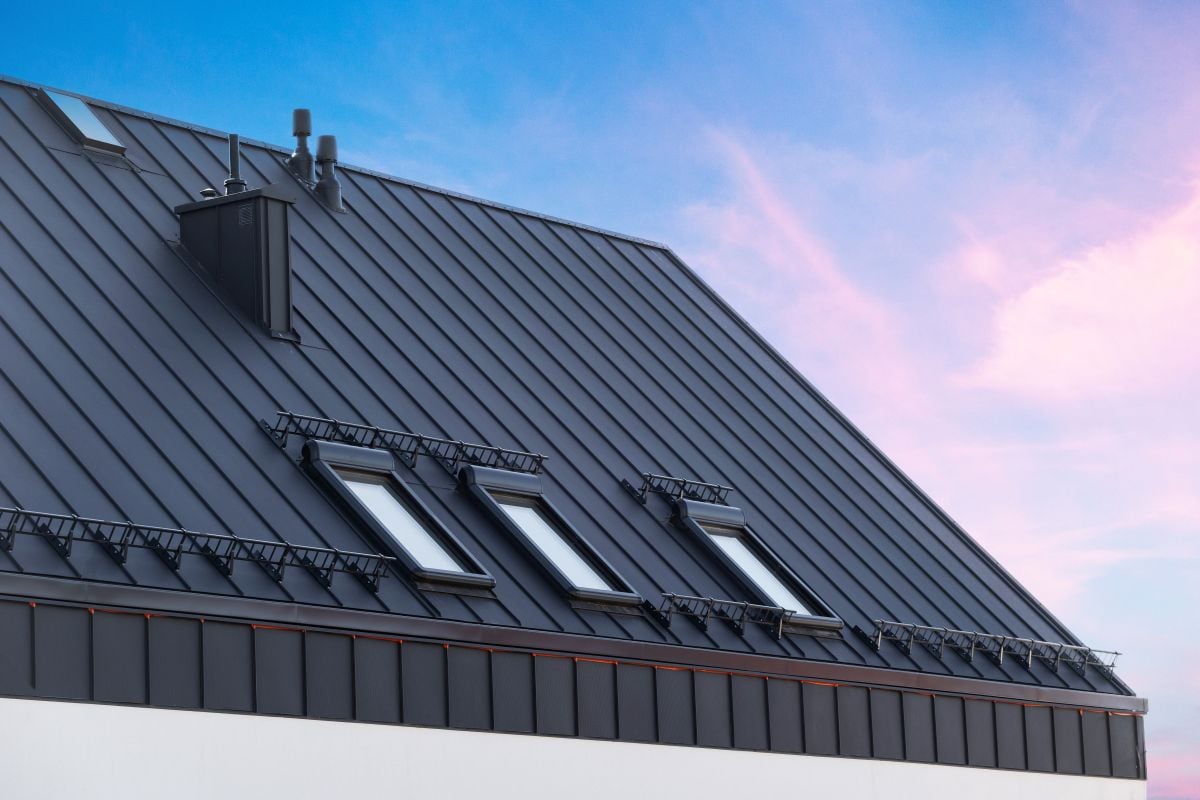
When homeowners and contractors talk about why one metal roof holds its color and finish for forty years while another looks faded and chalky within a decade, the answer almost always comes down to the coating. PVDF coating is the finish technology behind some of the most durable and visually consistent metal roofing systems on the market, and understanding what it actually does separates informed buyers from those who simply hope their roof holds up. If you are evaluating what makes a metal roofing system worth the investment over the long term, the coating specification deserves just as much attention as the panel profile or the substrate.
Here is what you will learn in this guide:
- What PVDF coating is and how it differs from other metal roofing finish technologies
- The seven specific benefits PVDF delivers for residential and commercial metal roofs
- How PVDF compares to polyester and SMP coatings in real-world performance
- What to look for in a warranty when evaluating PVDF-coated metal roofing products
- How climate and environmental conditions affect which coating matters most
- What questions to ask your contractor about the coating specification on any metal roofing bid
What PVDF Coating Is and Why It Is Not All Created Equal

PVDF stands for polyvinylidene fluoride, a high-performance fluoropolymer resin that forms the base of the most advanced paint systems used in architectural metal finishing today. When blended with acrylic resins and pigments, PVDF creates a coating that bonds tightly to metal substrates and resists the environmental forces that degrade conventional paints over time. The most recognized trademarked formulation is Kynar 500, manufactured by Arkema, though other manufacturers produce PVDF-based systems under their own names.
What separates PVDF from standard polyester paint systems is the molecular structure of the fluoropolymer itself. The carbon-fluorine bonds at the heart of PVDF chemistry are among the strongest in organic chemistry, which is why PVDF coatings resist UV radiation, oxidation, chemical exposure, and moisture at a level that polyester-based systems simply cannot match over extended periods. For property owners in the Marvin and surrounding areas investing in metal roofing that is expected to perform for 40 to 60 years, the coating specification is not a minor detail. It is a foundational component of the system’s performance promise.
Here is why the coating category matters as much as the metal substrate beneath it:
- UV resistance at the molecular level: PVDF’s fluoropolymer chemistry actively resists photodegradation, meaning the pigments and binder that give the coating its color and adhesion do not break down under sustained UV exposure the way conventional paints do.
- Color retention over decades: Independent testing consistently shows PVDF-coated panels retain measurably more of their original color after 10, 20, and 30 years of exposure than polyester or SMP-coated alternatives, particularly in high-UV environments.
- Chalking resistance: Chalking is the powdery residue that appears on the surface of aging paint systems as the binder degrades. PVDF coatings resist chalking far more effectively than lower-grade alternatives, keeping the roof surface clean and consistent in appearance across its service life.
- Chemical and pollution resistance: Industrial pollutants, acid rain, and airborne contaminants can attack paint systems over time. PVDF’s inert chemistry makes it resistant to these exposures in ways that matter for roofs in both suburban and light-industrial environments.
- Warranty backing that reflects real confidence: Manufacturers offer substantially longer and more comprehensive color retention and chalk resistance warranties on PVDF-coated products than on polyester-coated alternatives, because the performance data supports those commitments.
7 Benefits of PVDF Coating for Long-Lasting Metal Roofs in 2026
Each of the seven benefits below represents a real-world performance advantage that PVDF delivers over the full service life of a metal roofing system. Together, they explain why PVDF has become the specification standard for quality metal roofing projects and why buyers who understand what they are selecting make better long-term decisions.
1. Superior Fade Resistance That Holds Through Decades
Color fade is the most visible sign of coating degradation, and it is one of the primary reasons metal roofs installed with lower-grade finishes look significantly worse after ten or fifteen years than they did on installation day. PVDF’s fluoropolymer chemistry resists the UV-induced breakdown that causes pigments to shift, lighten, or lose saturation over time.
This matters particularly for colors at the extremes of the value spectrum. Deep charcoals, rich blues, forest greens, and crisp whites are all more vulnerable to visible fade than mid-toned neutrals, and PVDF is the coating technology that keeps these colors true across years of direct sun exposure.
Key performance characteristics:
- PVDF-coated panels typically retain color values well within acceptable fade thresholds for 30 to 40 years under standard exposure conditions
- Kynar 500 and equivalent PVDF systems are tested to AAMA 2605 specification, the most stringent architectural coating standard in North American building construction
- Comparable polyester coatings are typically tested only to AAMA 2604, a substantially less demanding standard
2. Exceptional Chalk Resistance Keeps the Roof Surface Clean
Chalking occurs when UV radiation breaks down the binder in a paint system, leaving a loose, powdery residue on the surface. Beyond its appearance, chalking indicates that the coating itself is degrading, which accelerates further deterioration and eventually exposes the substrate to corrosion risk.
PVDF’s binder chemistry is highly resistant to UV-induced breakdown, which is why PVDF-coated panels remain smooth and chalk-free long after polyester-coated panels in comparable conditions have begun showing surface degradation. For homeowners in the Marvin and surrounding areas who want their investment to look as intentional in year twenty as it did on installation day, chalk resistance is not a minor specification point.
3. Flexibility That Survives the Fabrication Process
One of the practical challenges of metal roofing coatings is that the coating must survive not just decades of weathering but also the fabrication processes that turn flat coil stock into finished roofing panels. Panels are roll-formed, cut, bent, and seamed during installation, and a coating that cannot flex with the metal during these processes will crack or lose adhesion at bends and seams before the roof has ever seen its first rainfall.
PVDF coatings are formulated with a combination of fluoropolymer and acrylic resins specifically to achieve a balance of hardness and flexibility that survives fabrication. This is one reason why PVDF-coated panels hold up better at panel edges, seam folds, and flashing bends than polyester-coated alternatives, which tend to be more brittle and more prone to micro-cracking at deformation points.
4. Outstanding Performance in Harsh Environmental Conditions
Not every roof faces the same environmental stresses, but PVDF performs well across a wide range of challenging conditions that degrade other coating systems faster. High UV environments, coastal salt air, industrial pollution zones, and regions with significant temperature cycling all present challenges that PVDF handles more reliably than alternative finishes.
Environmental performance highlights:
- Coastal and salt air environments: PVDF’s chemical resistance to chlorides makes it a preferred specification for metal roofing within reasonable distance of the ocean, though a true marine-grade substrate is also required in direct coastal applications.
- Industrial and urban environments: Acid rain, sulfur compounds, and airborne particulates from industrial activity attack polyester coatings much more aggressively than they attack PVDF. For commercial properties in active industrial or urban corridors, PVDF is not just preferable but often specified as a requirement.
- High-UV regions: Across the Sun Belt and in high-altitude locations where UV intensity is elevated, PVDF’s photostability translates directly into visibly better long-term appearance compared to lower-grade coatings.
5. Energy-Efficient Reflective Formulations Available
PVDF’s compatibility with a wide range of pigment systems, including near-infrared reflective pigments, makes it the coating platform of choice for cool roof metal roofing products. Cool roof formulations use PVDF as the binder for specialized pigments that reflect solar energy in the near-infrared spectrum, reducing heat absorption even in darker colors that would typically absorb significant solar energy.
This is a meaningful benefit for property owners in the Marvin and surrounding areas who want a darker roof color without accepting the full heat gain penalty that dark colors typically carry. PVDF-based cool roof coatings allow medium and even dark tones to qualify for ENERGY STAR certification and meet cool roof requirements in energy codes, expanding the color palette available to energy-conscious buyers.
6. Long Warranty Coverage Backed by Demonstrated Performance Data

The warranty that comes with a PVDF-coated metal roofing product is not a marketing claim. It is a reflection of the manufacturer’s confidence in performance data accumulated over decades of real-world installations and accelerated weathering testing. PVDF coatings from leading manufacturers typically carry:
- 30 to 40 year warranties against significant color fade (typically defined as exceeding 5 Hunter units of fade)
- 30 to 40 year warranties against chalk rating below a specified threshold
- Film integrity warranties covering peeling, cracking, and adhesion failure
These commitments are substantially stronger than what manufacturers offer on polyester or SMP-coated products, and the difference in warranty terms reflects a genuine difference in expected performance rather than marketing positioning.
7. Lower Total Cost of Ownership Over the Roof’s Service Life
PVDF coating adds a measurable cost premium to a metal roofing panel compared to polyester-coated alternatives. That premium is real, and it is worth understanding in context. A PVDF-coated metal roof that maintains its appearance and integrity for 40 to 50 years without significant coating maintenance represents a lower cost per year of service than a polyester-coated system that requires recoating or shows significant aesthetic degradation within 15 to 20 years.
For commercial property owners managing buildings as long-term assets, and for homeowners who view their roof as a once-in-a-lifetime investment rather than a replacement cycle to be managed, the economics of PVDF become straightforward when viewed across the full ownership horizon.
How PVDF Coating and PVDF Paint Compare to Other Metal Roofing Finish Options
The metal roofing market offers several coating technology categories, and understanding where PVDF sits relative to the alternatives helps buyers make informed comparisons when evaluating products and bids.
PVDF vs. Polyester Coatings
Standard polyester coatings are the most widely used finish on lower-cost metal roofing products. They provide adequate adhesion and corrosion resistance for typical residential applications but fade and chalk at a significantly higher rate than PVDF under UV exposure. Polyester coatings are tested to AAMA 2604 specification and typically carry 10 to 20 year fade and chalk warranties. They are appropriate for applications where budget constraints are the primary consideration and appearance degradation after 15 to 20 years is acceptable.
PVDF vs. SMP Coatings
Silicon-modified polyester, or SMP, occupies a middle tier between standard polyester and PVDF. SMP coatings offer improved hardness and scratch resistance compared to standard polyester, making them popular for steel roofing products that may experience more physical contact during installation. However, SMP coatings do not match PVDF’s UV resistance or color retention over extended periods, and their warranties typically reflect this with intermediate terms compared to standard polyester and PVDF.
PVDF vs. Fluoropolymer Alternatives
Kynar 500 is the most recognized PVDF formulation, but it is not the only fluoropolymer-based coating in the market. Hylar 5000, produced by Solvay, is a comparable PVDF resin that meets the same AAMA 2605 performance standard and is used by multiple coating formulators as an alternative to Kynar 500. Products formulated on either resin to AAMA 2605 standards deliver equivalent performance, and both are appropriate specifications for quality metal roofing projects.
| Coating Type | Performance Standard | Typical Fade Warranty | UV Resistance | Relative Cost |
| PVDF (Kynar 500 / Hylar 5000) | AAMA 2605 | 30 to 40 years | Excellent | Higher |
| SMP | AAMA 2604 | 15 to 20 years | Good | Moderate |
| Standard Polyester | AAMA 2604 | 10 to 20 years | Fair | Lower |
| Premium Polyester | AAMA 2604 | 15 to 20 years | Good | Moderate |
Questions to Ask Your Contractor About Coating Specification

Most homeowners never think to ask about coating specification when getting metal roofing bids, and some contractors take advantage of that gap by bidding polyester-coated products at prices that look competitive against PVDF-specified bids without making the difference clear. Here are the questions that put you in control of that conversation.
- What coating specification is included in this bid? Ask directly whether the product is PVDF-coated and whether it meets AAMA 2605 specification. If the contractor cannot answer this question confidently, that tells you something important about their product knowledge.
- What is the fade and chalk warranty on the coating? A short warranty period on a metal roof that is supposed to last 40 years should raise questions about what is actually being installed.
- Is this a Kynar 500 or Hylar 5000 formulation? These are the two primary PVDF resins used in architectural coatings. If the product uses a different fluoropolymer or the contractor is unsure, verify independently before proceeding.
- Can you provide the product data sheet? Every reputable metal roofing manufacturer publishes technical data sheets for their coated products. A data sheet will confirm the coating type, performance standard, and warranty terms clearly.
- What is the substrate beneath the coating? PVDF coating on a low-quality substrate still produces a suboptimal system. The coating and the metal beneath it need to be specified together for the system to perform as expected.
Invest in the Coating That Protects Everything Beneath It
A metal roof is only as good as what protects its surface. The panels, the substrate, and the installation all matter, but without a coating system engineered to withstand decades of UV exposure, temperature cycling, and environmental stress, even a well-installed metal roof will show its age far sooner than it should.
PVDF coating is the specification that separates metal roofing products built for the long term from those built to a price point. Understanding this distinction gives you the knowledge to evaluate bids honestly, ask the right questions, and make a roofing investment that performs the way you expect it to for as long as you own the property.
At Great State Roofing, we specify PVDF-coated products because we stand behind the work we install and we want your roof to look and perform as intended for decades to come. Whether you are in the early stages of exploring metal roofing or ready to move forward with a project in the Marvin and surrounding areas, our team is here to walk you through every specification decision with complete transparency.
Take the next step and contact us today to schedule a consultation and find out exactly what a properly specified metal roofing system looks like for your property.
Very professional. Quality work. I would highly recommend for any roofing needs.

Matt V

