

Understanding Cap Sheet (What It Does On Flat Roofs in 2026)
Posted 5.14.26 | 12 Minute Read
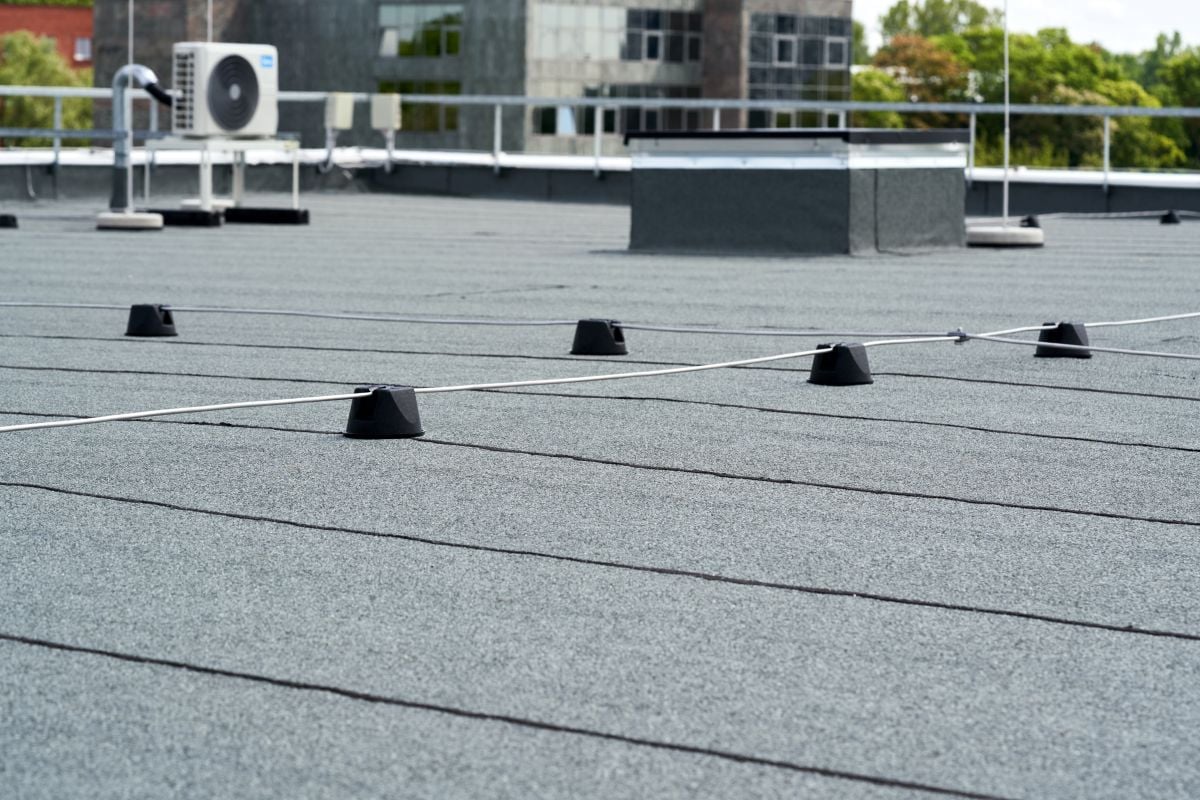
Flat roof terminology can feel overwhelming when you are trying to make an informed decision about a building you own or manage. One term that comes up repeatedly in commercial and residential flat roofing conversations is cap sheet, and it is worth understanding clearly before any repair or replacement project begins. A cap sheet is the top layer of a modified bitumen roofing system, and it is the component that does the heaviest lifting when it comes to weather resistance, UV protection, and the long-term performance of the entire assembly. Property owners in the Davidson and surrounding areas who want to understand how a well-built flat roofing system is designed to perform will find cap sheet is where that performance story begins.
Here is what you will learn in this guide:
- What a cap sheet is and how it differs from other layers in a modified bitumen assembly
- The specific roles a cap sheet performs in a flat or low slope roofing system
- The main types of cap sheet available and how they compare in performance and application
- How cap sheet condition affects the performance of the entire roof system beneath it
- What cap sheet failure looks like and how to recognize it before water intrusion occurs
- How to evaluate cap sheet quality and installation when reviewing a roofing proposal
Why the Cap Sheet Is the Most Important Layer on a Flat Roof

In a multi-layer modified bitumen roofing system, every component serves a purpose, but the cap sheet occupies a uniquely critical position. It is the only layer that faces direct exposure to sunlight, rainfall, foot traffic, wind-driven debris, and temperature extremes every single day. Everything beneath it, the base sheet, the insulation, and the structural deck, depends on the cap sheet to keep them dry, protected, and performing as designed.
A modified bitumen roofing system without a properly installed, quality cap sheet is a system waiting to fail. The base sheet provides secondary protection and contributes to the assembly’s overall performance, but it is not designed to serve as the primary weather surface. When the cap sheet deteriorates, fails, or is installed incorrectly, the protection the entire system provides collapses quickly. For property owners in Davidson and surrounding areas evaluating flat roofing options or dealing with an existing system that is showing its age, understanding the cap sheet’s role is the most important single piece of roofing knowledge they can have.
Here is what the cap sheet is responsible for across the life of the roofing system:
- Primary water exclusion: The cap sheet is the first and most critical line of defense against water infiltration. Its surface is designed to shed water efficiently, and its laps and seams are bonded to prevent any lateral water migration beneath the surface.
- UV and heat resistance: Direct sun exposure degrades roofing materials faster than almost any other environmental force. Cap sheet surface treatments, whether granule surfacing, foil facing, or smooth coating with UV inhibitors, are specifically designed to resist this degradation and protect the modified bitumen membrane beneath.
- Mechanical protection: The cap sheet absorbs the physical impact of foot traffic, falling debris, hail, and wind-driven particles that would otherwise reach and damage the more vulnerable base layers of the system.
- Thermal cycling tolerance: Flat roofs experience significant temperature swings between day and night and between seasons. The modified bitumen polymer in a quality cap sheet is formulated to remain flexible across a wide temperature range, preventing the cracking and splitting that rigid materials experience under thermal cycling stress.
- System longevity anchor: The overall service life of a modified bitumen roofing system is largely determined by the quality and condition of the cap sheet. A well-installed quality cap sheet on a sound base assembly can provide 20 to 30 years of effective service before the system requires significant attention.
5 Ways Cap Sheet Works in a Modified Bitumen Roofing System
Modified bitumen roofing did not arrive as a complete system overnight. It evolved through decades of refinement as roofing engineers worked to improve on traditional built-up roofing by incorporating polymer modifiers into the bitumen that addressed the most common failure modes of earlier flat roofing materials. Understanding how cap sheet fits into this evolution, and specifically how it functions within the layers of a complete system, clarifies why material selection and installation quality matter so much.
The typical modified bitumen system consists of a base sheet installed over insulation and decking, sometimes with one or more interply sheets adding thickness and strength, and the cap sheet as the final installed layer. Each of these layers contributes to the system’s overall performance, but the cap sheet is the one that determines how the system presents to the environment and how well it holds up over time.
1. The Base Sheet’s Relationship to the Cap Sheet
The base sheet is the foundation layer of the modified bitumen assembly, installed directly over the insulation and roof deck. Its primary purpose is to provide a stable substrate for the cap sheet and to contribute a secondary layer of water resistance in case the cap sheet is ever compromised. The base sheet also manages the thermal differential between the warm interior of the building and the exterior, helping to prevent condensation within the assembly.
The quality of the bond between the base sheet and the cap sheet is critical to system performance. A cap sheet that is not fully adhered to the base sheet creates voids where wind uplift forces can engage the membrane, where water can migrate laterally if it finds any entry point, and where the two layers move independently under thermal cycling in ways that stress both materials and their seam connections.
2. APP Modified Bitumen Cap Sheet
APP stands for atactic polypropylene, a thermoplastic polymer that is blended into bitumen to modify its properties. APP-modified bitumen produces a cap sheet that is harder and more resistant to UV degradation than unmodified bitumen, with good high-temperature performance that makes it particularly well-suited for roofs in sun-exposed climates.
APP cap sheets are typically installed by torch application, where a propane torch melts the underside of the sheet as it is unrolled, creating a hot-mopped bond with the layer beneath it. This installation method requires skilled application because insufficient heat produces inadequate adhesion and excessive heat can burn through the membrane. When installed correctly, a torched APP cap sheet produces a continuous, fully adhered membrane with excellent seam integrity.
Key characteristics of APP cap sheet:
- Higher softening point than SBS, making it better suited for hot climate applications where summer heat loading is significant
- Granule-surfaced versions provide UV protection and improved impact resistance
- Less flexible at low temperatures than SBS, which can limit cold-weather installation windows
- Torch application creates a visually inspectable bond line that experienced installers can assess in real time
3. SBS Modified Bitumen Cap Sheet

SBS stands for styrene-butadiene-styrene, a synthetic rubber polymer that modifies bitumen’s properties in a fundamentally different direction than APP. SBS-modified bitumen produces a cap sheet that is significantly more flexible and elastic than APP, with excellent low-temperature performance that allows it to stretch and recover under thermal cycling stress without cracking.
SBS cap sheets can be installed by torch application, cold-adhesive application using a compatible adhesive, or self-adhesion in peel-and-stick product formats. The self-adhering versions have gained significant market share in recent years because they eliminate the fire risk and skill requirements of torch application while producing strong adhesion when installed correctly on clean, primed surfaces.
Key characteristics of SBS cap sheet:
- Superior flexibility and elongation compared to APP, which translates to better performance in climates with significant temperature variation
- Cold-adhesive and self-adhering installation options reduce fire risk during application
- Available in granule-surfaced, smooth, and foil-faced versions for different performance and aesthetic requirements
- Slightly more vulnerable to UV degradation than APP without surface treatment, making surface coating or granule coverage important for exposed installations
4. Granule-Surfaced Cap Sheet
Whether APP or SBS-based, granule-surfaced cap sheet is the most common specification for exposed roofing applications. The ceramic or mineral granules embedded in the surface provide UV protection by reflecting solar radiation before it reaches the modified bitumen membrane, impact resistance against hail and debris, slip resistance for maintenance foot traffic, and aesthetic uniformity that gives a clean finished appearance to the completed roof.
Granule color selection affects both aesthetics and performance. Lighter granule colors reflect more solar energy than darker ones, reducing heat gain and cooling loads in the building below. For property owners in Davidson and surrounding areas who are weighing energy performance alongside aesthetics in their cap sheet selection, granule color is a specification decision worth discussing with a qualified contractor.
5. Smooth and Foil-Faced Cap Sheet
Smooth cap sheet, without granule surfacing, is used primarily as an interply layer within a multi-ply assembly or in applications where a coating will be applied over the finished membrane. It provides the same modified bitumen waterproofing performance as granule-surfaced products but requires either a protective coating or an overlying layer to provide UV resistance for long-term exposed installations.
Foil-faced cap sheet uses an aluminum foil facing rather than granules as its surface treatment. The foil provides excellent UV resistance and high solar reflectance, making foil-faced products a strong choice for energy-conscious flat roof applications where a cool roof designation is desired. The foil facing requires careful handling during installation to avoid tears or punctures that would compromise both the aesthetic and the UV protection it provides.
Recognizing Cap Sheet Failure Before It Becomes a Leak
Cap sheet deterioration follows recognizable patterns that allow property owners and contractors to identify problems during routine inspections before they result in water intrusion. Knowing what to look for during a roof walk or a ground-level visual inspection gives property owners early warning that the system needs attention.
- Surface cracking and alligatoring: As modified bitumen ages and loses flexibility, the surface develops a network of fine cracks that progressively widen and deepen with thermal cycling. Early cracking appears as shallow surface fissures. Advanced cracking, often called alligatoring because the pattern resembles reptile scales, indicates that the membrane has become brittle throughout its thickness and is losing its ability to shed water effectively.
- Granule loss and bare spots: Granule loss from a cap sheet surface exposes the modified bitumen beneath to direct UV radiation, accelerating its degradation. Bare spots that were once granule-covered indicate either physical abrasion damage, adhesion failure between the granules and the surface coating, or granule wash-off from inadequate slope that allows water to pool and carry granules toward drains.
- Blisters and bubbles: Blisters in a cap sheet surface occur when moisture or volatile gases are trapped between the cap sheet and the base sheet, typically during installation or after moisture infiltration has occurred. Small blisters may remain stable for extended periods but represent a weakness in the adhesion between layers. Large blisters or blisters that are growing indicate active moisture movement within the assembly that requires investigation and repair.
- Lap seam separation: The seams where one roll of cap sheet overlaps the adjacent roll are the most vulnerable locations in any modified bitumen installation. Seam separation can result from inadequate heat during torch application, contamination of the bonding surface before application, or thermal movement that stresses a seam that was never fully bonded. Any visible gap or lifted edge at a lap seam is an active water entry risk that should be addressed immediately.
- Ponding water stains: Flat roofs are designed to drain completely within 48 hours of a rain event. Areas that show persistent discoloration, debris accumulation, or biological growth in concentric rings around drain locations indicate that water is regularly ponding in those areas. Ponding accelerates cap sheet degradation through sustained water contact, freeze-thaw cycling at the water’s edge, and the weight loading of standing water on the membrane and the structure below it.
Cap Sheet vs. Other Flat Roofing Options: How It Compares

Modified bitumen with a quality cap sheet is one of several flat roofing options that property owners regularly evaluate. Understanding how it compares to the alternatives helps contextualize the cap sheet discussion within a broader roofing decision.
| Factor | Modified Bitumen with Cap Sheet | TPO Single-Ply | EPDM Single-Ply | Built-Up Roofing |
| Expected Lifespan | 20 to 30 years | 15 to 25 years | 20 to 30 years | 20 to 30 years |
| UV Resistance | Excellent (granule or foil faced) | Good (white membrane) | Fair (requires coating) | Good (gravel surfaced) |
| Foot Traffic Tolerance | Good | Fair | Fair | Excellent |
| Repair Simplicity | Good | Fair | Good | Complex |
| Low Temperature Performance | Excellent (SBS) | Good | Excellent | Fair |
| Installation Fire Risk | Moderate (torch APP) | Low | Low | Higher (hot mopped) |
| Cool Roof Potential | Good (light granules or foil) | Excellent (white) | Fair | Fair |
Modified bitumen with a quality cap sheet performs competitively across most of these dimensions and holds a specific advantage in foot traffic tolerance and low-temperature flexibility when SBS is specified. For property owners in the Davidson and surrounding areas who manage buildings with regular rooftop maintenance access requirements, this durability advantage is a meaningful practical consideration.
Make Sure Your Flat Roof Has the Cap Sheet It Deserves
A flat roof is only as good as the layer that faces the weather, and that layer is the cap sheet. Whether you are evaluating a new flat roof installation, assessing an existing system that is showing signs of age, or trying to make sense of a contractor proposal that includes materials you are not familiar with, understanding what a cap sheet does and what distinguishes a quality product from a marginal one puts you in a far stronger position to make the right decision.
At Great State Roofing, we work with property owners throughout the Davidson and surrounding areas to specify, install, and maintain flat roofing systems that are built around quality materials installed with the craftsmanship those materials deserve. If you have questions about your current flat roof’s condition, want to understand what a repair or replacement scope should include, or simply want a professional assessment of where things stand, our team is here to give you honest answers.
Your flat roof deserves the best cap sheet for the job. Contact us today to schedule an inspection and find out exactly what your roofing system needs to perform at its best.
Very professional. Quality work. I would highly recommend for any roofing needs.

Matt V

