

Asphalt Roof Repair 101 (7 Common Issues That Can Spread)
Posted 5.12.26 | 13 Minute Read
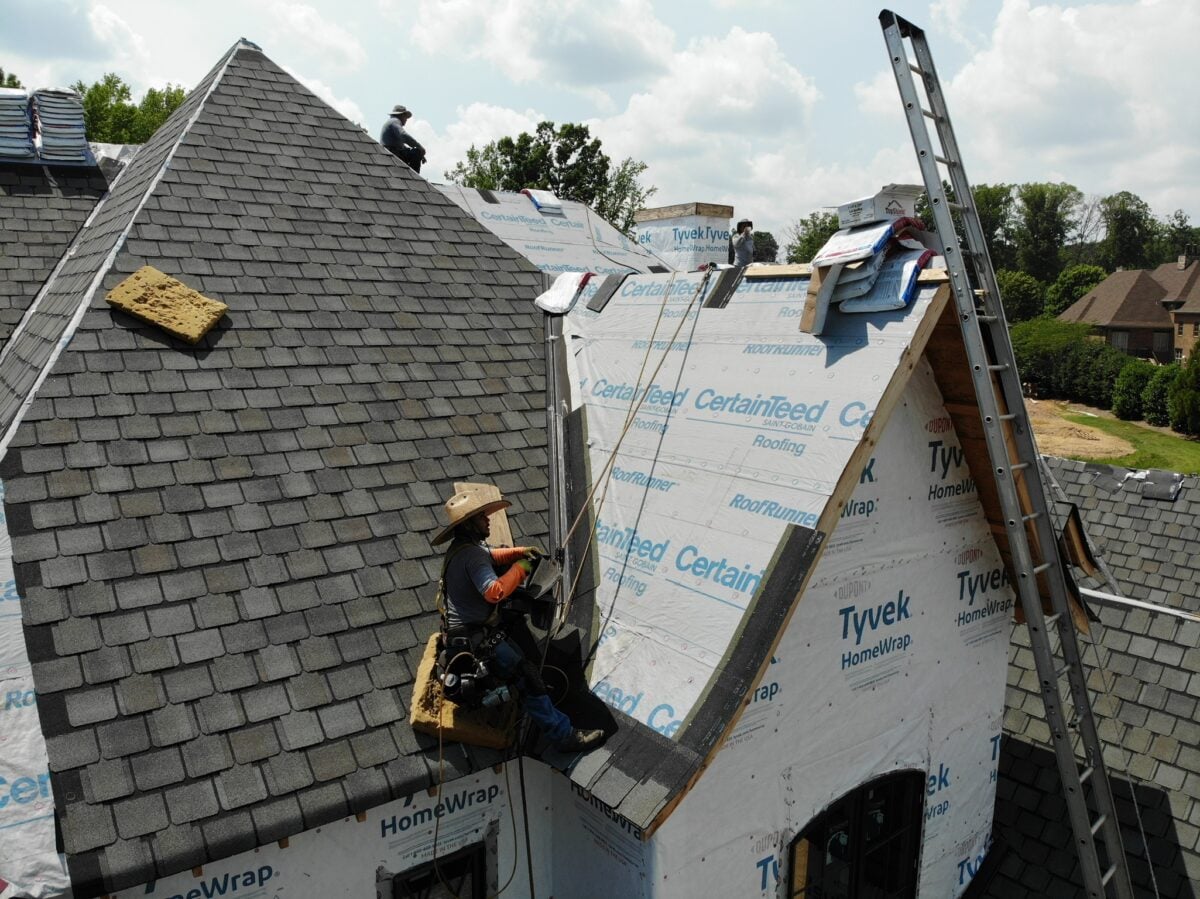
Small roofing problems have a consistent and frustrating tendency to become large ones when they are left unaddressed. A cracked shingle that looks minor from the ground allows water to reach the underlayment on every subsequent rainfall. Failing caulk at a flashing joint directs water into the wall cavity a little more with each storm. Asphalt roof repair is most effective, least disruptive, and least expensive when it happens at the earliest stage of a problem rather than after the damage has had time to spread through the layers of the roof assembly. Homeowners who understand what a complete residential roofing system is designed to protect are better equipped to recognize when something needs attention before it escalates.
Here is what you will learn in this guide:
- The seven most common asphalt roof issues and exactly how each one spreads if ignored
- What the early warning signs of each problem look like from ground level and during an attic inspection
- When a repair is the right call versus when damage has progressed to the point where replacement makes more sense
- How weather events in the Carolinas specifically accelerate certain types of asphalt roof damage
- What a professional repair process looks like and what to expect from a qualified contractor
- How to document damage effectively for insurance purposes
Why Roofing Problems Spread Faster Than Most Homeowners Expect

The design of an asphalt roofing system relies on multiple layers working together as an integrated whole. Shingles shed water off the surface. Underlayment provides a secondary barrier if any water gets beneath the shingles. Flashings seal every transition and penetration point where water could otherwise find a path through the assembly. Decking provides the structural foundation everything rests on. When any one of these components fails, the others are placed under increased stress, and the system as a whole becomes progressively less effective at doing its job.
This layered dependency is why a problem that looks isolated on the surface rarely stays isolated for long. Water that gets beneath a cracked shingle saturates the underlayment, eventually compromising its barrier function. Saturated underlayment allows moisture to reach the decking, where it promotes rot and structural softening. Rot in the decking creates movement that stresses adjacent shingles and flashings, creating new entry points. For homeowners in the Weddington and surrounding areas where intense summer storms and winter ice events create regular stress on roofing systems, recognizing this cascade dynamic is the foundation of smart repair decision-making.
Here is why acting on asphalt roof repairs promptly protects more than just the shingles:
- Decking preservation: Wood roof decking that stays dry can last the lifetime of the home. Decking that absorbs moisture from a slow leak above it can deteriorate to the point of requiring replacement within a few seasons, turning a minor repair into a major structural project.
- Interior damage prevention: Water that penetrates through a compromised roof assembly eventually reaches insulation, drywall, and framing, creating damage that is not only expensive to remediate but often requires disruption to living spaces during repair.
- Mold risk reduction: Sustained moisture in roof and attic assemblies creates conditions for mold growth that affects air quality, poses health risks, and requires specialized remediation that costs significantly more than the original roof repair would have.
- Insurance claim integrity: Insurers assess whether claimed damage resulted from a covered event or from pre-existing deterioration that was not maintained. Documented prompt repairs protect your ability to make valid claims for storm damage that occurs after the repair was made.
- Total repair cost control: A single cracked shingle replaced promptly costs a fraction of the cost of replacing a section of decking, underlayment, and multiple shingles after water infiltration has been allowed to spread for months.
7 Common Asphalt Roof Issues That Can Spread
Each of the seven issues below follows the same pattern: it begins as something addressable and relatively inexpensive, and it becomes progressively more damaging and costly the longer it is allowed to develop. Understanding how each one progresses helps homeowners recognize the point at which they are looking at an early-stage problem versus one that has already begun to spread.
1. Cracked or Broken Shingles
Cracked shingles are one of the most common results of hail impact, thermal cycling stress, and simple aging-related brittleness. A crack in a shingle creates a gap in the water-shedding surface that allows rainfall to reach the underlayment below. Small cracks in isolated shingles can be addressed with roofing sealant applied to seal the crack without full shingle replacement. Larger cracks, impact fractures that break through the full shingle thickness, or cracks in multiple adjacent shingles warrant replacement of the affected shingles.
How this issue spreads if ignored:
- Water that reaches the underlayment through a cracked shingle saturates it progressively, eventually compromising the underlayment’s barrier function across a larger area than the original crack
- Repeated freeze-thaw cycling forces water that has entered through the crack deeper into the assembly, expanding the damage area each winter
- Adjacent shingles can be lifted and stressed by water that gets beneath a cracked shingle and freezes, creating new cracks and potential gaps in the surrounding area
2. Missing Shingles
A missing shingle leaves a section of underlayment fully exposed to direct rainfall, UV degradation, and wind uplift that it was never designed to withstand on its own. Underlayment is a secondary barrier, not a primary weather surface, and its performance degrades quickly under direct exposure. The area beneath a missing shingle can absorb significant water during a single rain event, and the edges of adjacent shingles are vulnerable to being lifted by wind that now has direct access to the roof surface below them.
Missing shingles in the Weddington and surrounding areas most commonly result from wind events that exceed the shingle’s wind resistance rating, from improper original installation that left shingles inadequately fastened, or from advanced aging that has caused shingles to become brittle enough to separate under wind stress.
Immediate repair indicators:
- Any missing shingle should be replaced within days, not weeks, to prevent underlayment damage that turns a straightforward shingle replacement into a larger scope project
- The surrounding shingles should be inspected for lifted edges, inadequate fastening, or incipient cracking that may indicate wind damage beyond the single missing shingle
- The fastening pattern on the replacement shingle should match or exceed the manufacturer’s specification for the wind zone the building is located in
3. Flashing Failures
Flashings are the metal components that seal every transition point on the roof: chimney bases, skylight perimeters, pipe penetrations, wall intersections, and valley channels. They are the most common source of residential roof leaks that are not directly attributable to damaged shingles, and they fail in predictable ways that are entirely repairable when caught early.
The sealants and caulks used at flashing edges and penetration points have lifespans that are shorter than the shingles around them, typically 7 to 15 years depending on the product and exposure conditions. As these sealants age, they crack, shrink, and separate from the surfaces they seal, creating gaps that direct water into the wall or deck assembly below. Metal flashings themselves can also corrode, lift at edges, or develop pinhole failures at stress points.
Signs of flashing failure to look for:
- Water staining on interior walls or ceilings near chimneys, skylights, or dormers that appears or worsens during rainfall
- Caulk that is visibly cracked, shrunken away from the metal or the surface it contacts, or absent at any flashing transition
- Rust staining on the roof surface or on exterior walls below flashing locations
- Flashing edges that have lifted away from the shingle surface or the wall substrate they are meant to seal against
4. Granule Loss and Surface Degradation

Granule loss from asphalt shingles is a natural part of the aging process, but when it accelerates beyond the normal rate, it indicates that the shingle surface is degrading faster than its rated lifespan anticipated. Accelerated granule loss exposes the underlying asphalt to direct UV radiation, which rapidly speeds oxidation and oil loss in the shingle matrix, making shingles brittle and reducing their water resistance.
The most visible indicator of granule loss is the accumulation of granules in gutters and at downspout discharge points. A handful of granules in the gutter after a heavy rain is normal. A significant volume after every rain event, or bare patches visible on the shingle surface from ground level, indicates a problem that will progress without intervention.
When granule loss has reached the point of exposed asphalt, the affected shingles cannot be restored by granule replenishment. They need replacement. The surrounding shingles should be assessed to determine whether the degradation is localized to a specific section or is representative of whole-roof aging that warrants a broader replacement scope conversation.
5. Lifted or Curling Shingle Edges
Shingle edges that have lifted off the roof surface or that are curling upward at the corners create multiple vulnerability points simultaneously. Lifted edges allow wind to get beneath the shingle and exert upward force that can tear the shingle free entirely, particularly during high-wind events. They also allow water driven horizontally by wind to travel up the slope beneath the lifted shingle edge rather than running down the surface, bypassing the water-shedding design of the system entirely.
Curling at shingle corners most commonly results from moisture imbalance within the shingle, inadequate ventilation that creates excessive heat and humidity cycling in the attic below, or simple advanced aging of the shingle mat. In early stages, lifted edges can sometimes be re-adhered with roofing sealant applied under the lifted section and pressed flat. More advanced curling that has stiffened the shingle into its curled position indicates replacement is needed.
6. Roof Deck Soft Spots
Soft spots in the roof deck, detectable by the spongy feel underfoot when walking the roof or by visible depression of the surface, indicate that wood decking has absorbed sufficient moisture to begin structural deterioration. Soft spots always have a source of moisture infiltration above them, whether through a damaged shingle, failed flashing, or compromised valley, and that source must be identified and repaired before or alongside the deck repair.
Localized soft spots from isolated leak sources can often be addressed by replacing the affected deck section and the roofing layers above it without requiring full roof replacement. Widespread soft spots across multiple sections of the roof indicate systemic water management failure that likely requires a more comprehensive assessment of the entire roofing system.
7. Valley Deterioration
Valleys are the V-shaped channels where two roof planes meet, and they carry a disproportionate volume of water relative to field areas of the roof because they collect runoff from both planes simultaneously. The roofing materials in valleys, whether open metal valley flashing, closed-cut shingles, or woven valley construction, are under greater hydraulic stress than any other section of the roof surface and typically show wear sooner.
Valley deterioration most commonly manifests as cracked or missing sealant in open metal valleys, worn-through shingle surfaces in closed or woven valleys at the center of the channel, or rust and perforation in older metal valley flashings. Any breach in valley protection allows the concentrated water flow that runs through the valley during rainfall to find a direct path to the decking beneath.
How valley issues spread:
- A single pinhole or narrow crack in a metal valley flashing can allow significant water volume to enter the decking during a heavy rain event due to the velocity and volume of water flowing through the valley
- Worn-through shingles at valley centers expose underlayment that degrades under the abrasive flow of water carrying debris and granules from above
- Valley leaks are among the most difficult to trace to their source because water that enters at the valley center often travels laterally along the decking before appearing as a ceiling stain far from the actual entry point
DIY Repairs Versus Professional Repairs: Drawing the Right Line
Some asphalt roof repairs are within reach of a competent homeowner with the right materials and a comfort level working at height. Others require professional knowledge of the system, appropriate equipment, and experience identifying the true source of a problem rather than just its visible symptoms. Understanding where that line falls protects homeowners from both unnecessary professional expense and from DIY repairs that address symptoms without solving the underlying problem.
Repairs Appropriate for Homeowner Handling
- Applying roofing sealant to re-adhere a lifted shingle edge that is still otherwise intact
- Sealing a minor caulk gap at a pipe boot or small penetration flashing with appropriate roofing sealant
- Clearing debris from valleys and gutters that is causing localized water backup
- Applying moss or algae treatment products to an accessible roof section following manufacturer instructions
Repairs That Require Professional Involvement
- Any repair involving full shingle replacement, since matching color, pattern, and granule coverage requires product knowledge and access to compatible materials
- Flashing repair or replacement at chimneys, skylights, or wall intersections, where the repair must integrate correctly with the existing flashing system and surrounding shingles
- Any situation where soft decking is suspected, since decking repair requires removing and replacing the overlying roofing layers correctly
- Any repair following a hail or wind event that may involve insurance documentation, since professional assessment creates the documentation that supports a valid claim
What a Professional Asphalt Roof Repair Assessment Covers

Hiring a professional for asphalt roof repair is not simply paying someone to apply materials you could have purchased yourself. A qualified roofing contractor brings a structured diagnostic approach that identifies the true source of a problem rather than just its visible expression, and they bring knowledge of how the repair needs to integrate with the existing system to perform correctly over time.
A thorough professional repair assessment should include a full visual inspection of the roof surface from ridge to eave, an attic inspection to identify any signs of moisture infiltration in the decking or insulation, review of all flashings at penetrations and transitions, assessment of the gutters and drainage paths that affect how water moves off the roof surface, and a written summary of findings that distinguishes between items requiring immediate repair and items to monitor over the next inspection cycle.
Ask any contractor you are evaluating for repair work to describe their diagnostic process before accepting a repair scope. A contractor who quotes a repair without conducting a meaningful inspection is likely addressing only the visible symptom rather than the actual problem, and the repair will not perform as expected.
Address Roof Problems While They Are Still Manageable
Every asphalt roof issue described in this guide follows the same trajectory: it starts small, it gives visible warning signs if you know what to look for, and it becomes progressively more expensive and disruptive the longer action is deferred. The homeowners who spend the least on roof repairs over the life of their roof are not the ones who get lucky. They are the ones who respond to early warning signs before the damage has had time to spread.
At Great State Roofing, we help homeowners throughout the Weddington and surrounding areas assess, diagnose, and repair asphalt roofing issues at every stage of development. Whether you have spotted something that concerns you, want a professional assessment after a recent storm, or are simply due for an inspection that has been deferred too long, our team is ready to give you a clear and honest picture of what your roof needs.
Do not wait for a ceiling stain to tell you there is a problem. Contact us today to schedule an inspection and get ahead of any issues before they have the chance to spread.
Very professional. Quality work. I would highly recommend for any roofing needs.

Matt V

