

Hail and Wind Storm Roof Damage: What Mooresville and Hickory Homeowners Should Check Now
Posted 7.29.26 | 8 Minute Read
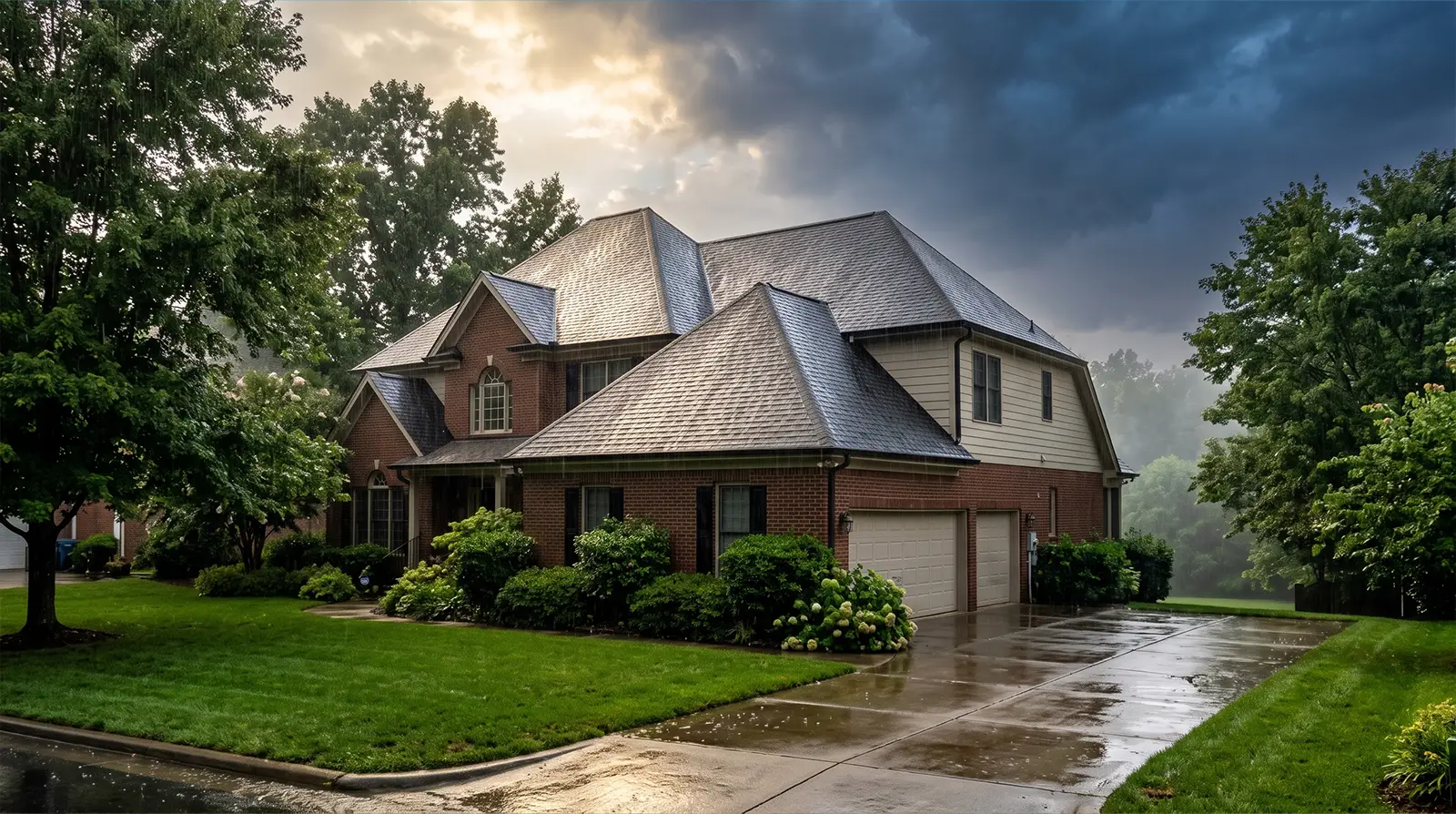
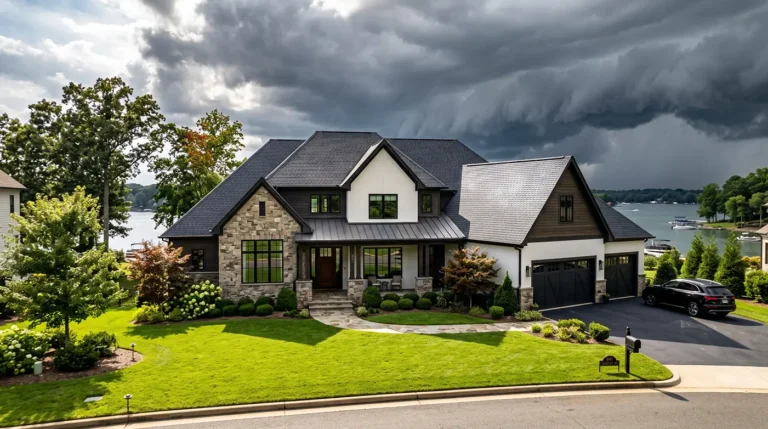
Severe thunderstorms moved through parts of the western North Carolina Piedmont on July 28, bringing conditions capable of producing damaging wind and hail. Preliminary National Weather Service reports documented an outage attributed to fallen trees or limbs in Catawba County, along with one-inch and 1.25-inch hail reports in nearby Alexander County. Iredell County was also included in a Severe Thunderstorm Watch that warned residents about damaging winds and hail.
For homeowners in Mooresville, NC 28117, Hickory, NC 28601, and surrounding communities, the storm is a reminder that roof damage is not always visible from the ground. A roof may appear normal while shingles, flashing, vents, gutters, or underlying materials have been weakened.
The current dry weather provides an opportunity to inspect properties before another period of showers and thunderstorms. National Weather Service forecasts show increasing rain and thunderstorm chances beginning Saturday night and continuing through Sunday and Monday in both Iredell and Catawba counties.
Why Hail and Wind Damage Can Be Difficult to See
Storm damage does not always create an immediate ceiling leak.
Hail can loosen protective granules, bruise asphalt shingles, crack older roofing materials, and damage metal vents or flashing. Strong winds can lift shingle edges, break adhesive seals, loosen ridge caps, and create small openings around roof penetrations.
These problems may remain unnoticed until another heavy rain sends water beneath the roofing system.
The effects also vary from one property to another. Two homes on the same street can experience different damage depending on:
- Roof age and condition
- Roofing material
- Roof slope and orientation
- Tree coverage
- Wind direction
- Hail size and density
- Previous repairs
- Installation quality
That is why a storm report near your neighborhood does not automatically mean your roof is damaged. It does, however, provide a good reason to complete a careful visual check.
Signs of Wind Damage to a Roof
Wind damage often begins along roof edges, ridges, valleys, and areas where roofing materials were already loose or worn.
Common warning signs include:
- Missing shingles
- Shingles lying in the yard
- Lifted or curled shingle edges
- Loose ridge-cap shingles
- Bent or detached flashing
- Damaged pipe boots or roof vents
- Pieces of fascia or soffit on the ground
- Tree limbs resting on the roof
- Loose gutters or downspouts
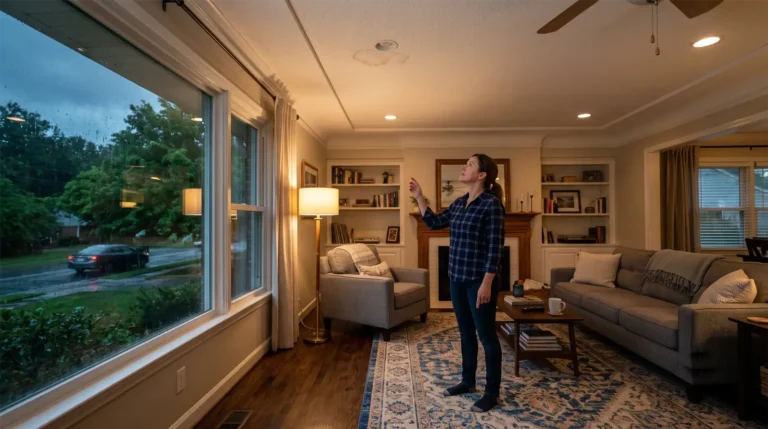
- New water stains on ceilings or walls
A shingle can also be lifted and then fall back into place. From the ground, it may look normal even though its seal has been broken. Once the seal fails, future wind-driven rain may enter beneath the shingle.
Signs of Hail Damage
Hail damage can be especially difficult for an untrained homeowner to identify.
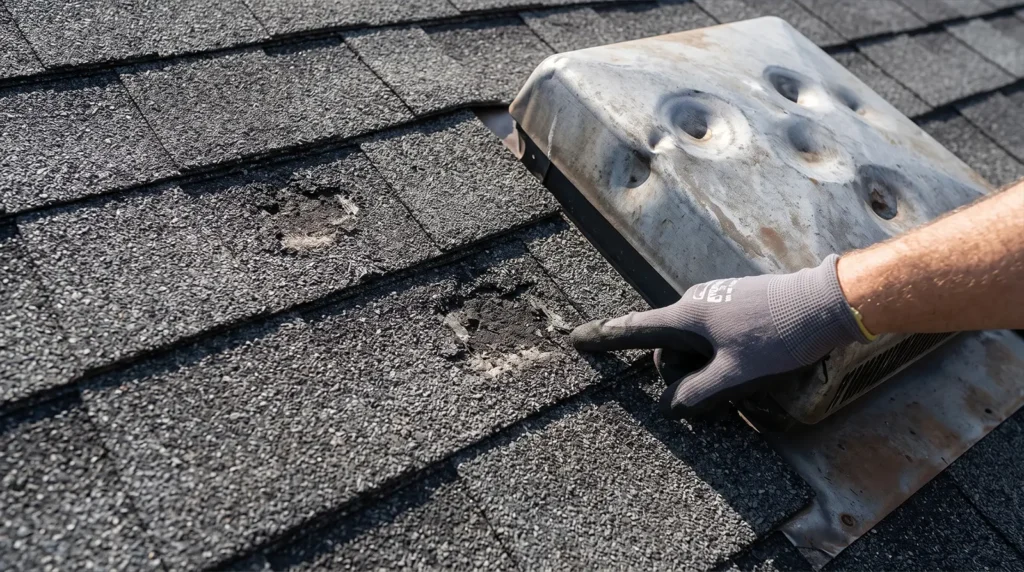
On an asphalt shingle roof, hail may leave dark impact marks, areas of missing granules, small cracks, or soft bruised spots. Damage to metal components is often easier to see. Look for dents on:
- Gutters
- Downspouts
- Roof vents
- Metal flashing
- Window screens
- HVAC equipment
- Garage doors
- Metal patio furniture
Damage to these items does not prove that the roof needs replacement, but it can help establish that hail reached the property.
Metal roofing, synthetic roofing, tile, slate, and flat roofing systems react differently to hail. Each system should be evaluated according to its material, fastening method, age, and condition.
What Homeowners Can Safely Check From the Ground
Homeowners should not climb onto a steep, wet, or potentially damaged roof. Loose shingles, broken decking, wet surfaces, and hidden storm damage can create serious fall hazards.
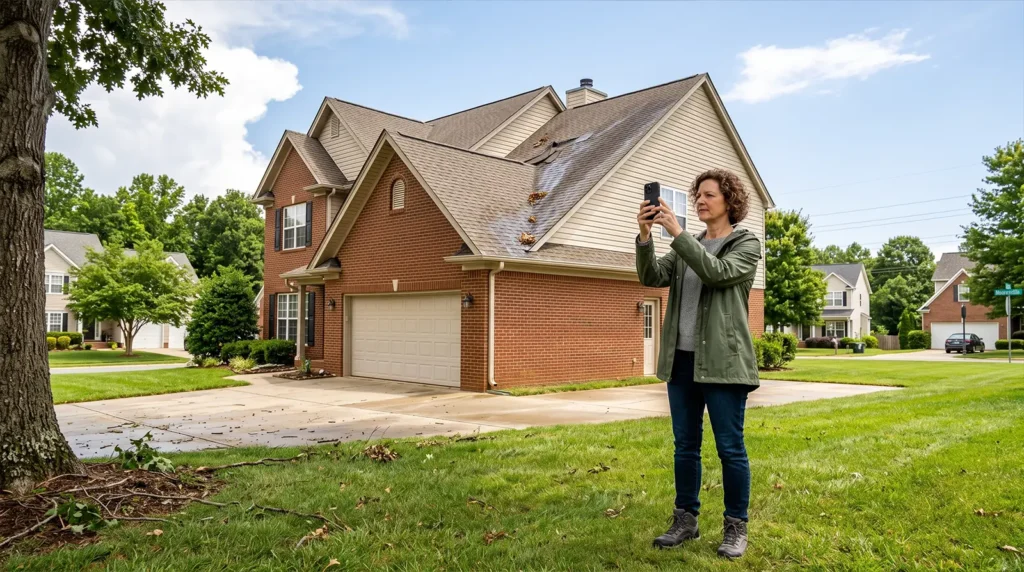
Instead, complete a ground-level inspection:
- Walk around the home and look for roofing materials in the yard.
- Check gutters, downspouts, siding, screens, and outdoor metal surfaces for dents or impact marks.
- Look at roof edges and ridges from a safe distance.
- Inspect the attic for moisture, damp insulation, or daylight entering through the roof.
- Check ceilings and walls for new stains, bubbling paint, or discoloration.
- Photograph visible damage before moving or repairing anything.
- Move vehicles away from damaged trees or hanging branches.
- Contact a qualified roofing contractor when you see signs of damage or are unsure about the roof’s condition.
Binoculars or a camera with a zoom lens can help with a preliminary inspection, but they cannot replace a hands-on professional assessment.
Do Not Wait for a Major Leak
Many homeowners wait until water appears inside the house before scheduling an inspection. By then, moisture may already have reached roof decking, attic insulation, drywall, or interior finishes.
Early inspection may identify smaller issues such as:
- A lifted shingle
- Loose flashing
- A damaged pipe boot
- An exposed nail
- A punctured roof membrane
- A clogged or detached gutter
- Minor tree-impact damage
Some of these problems may require only a targeted repair. Delaying the inspection can allow a manageable problem to become more extensive.
Preparing Before the Next Round of Rain
The forecast currently provides a dry period through Friday, followed by increasing rain and thunderstorm chances over the weekend. Iredell County has a 50% chance of showers and thunderstorms Saturday night and approximately a 70% chance Sunday. The Hickory forecast shows rain and thunderstorm chances increasing to around 60% Saturday night and 80% Sunday.
Before the rain returns, homeowners can:
- Clear visible debris from ground-level drains
- Confirm that downspouts direct water away from the foundation
- Secure patio furniture and outdoor objects
- Check trees for broken or hanging limbs
- Photograph the exterior of the property
- Move valuables away from known attic or ceiling leaks
- Schedule an inspection if the roof may have been affected
Never attempt exterior roof repairs while a storm is approaching or while the roofing surface is wet.
Roof Repair or Roof Replacement?
Storm exposure does not automatically mean a roof needs to be replaced.
A professional recommendation should consider:
- The type and extent of damage
- Roof age
- Previous repairs
- Condition of the shingles or roofing membrane
- Number of affected roof slopes
- Availability of compatible replacement materials
- Condition of the decking, flashing, and ventilation
- Manufacturer installation requirements
Localized flashing or shingle damage may be repairable. Widespread impact damage, extensive wind lifting, repeated leaks, or damage to an aging roof may make replacement the more practical long-term option.
Homeowners should receive a clear explanation of the findings rather than being pressured into an immediate decision.
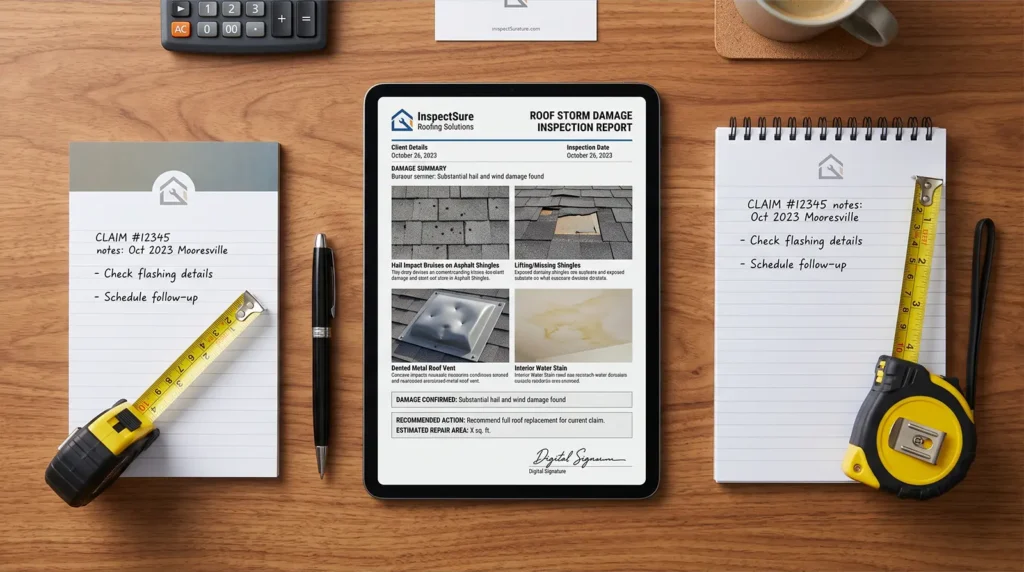
Documenting Storm Damage for an Insurance Claim
Insurance coverage depends on the individual policy, cause of loss, deductible, roof condition, and findings of the insurance company.
Homeowners who believe their property was damaged should:
- Record the date and approximate time of the storm
- Take photographs and video
- Save weather alerts and storm-related notices
- Document interior leaks and damaged personal property
- Prevent additional damage when it can be done safely
- Keep receipts for temporary protective measures
- Review the policy and deductible
- Contact the insurance carrier to discuss the claim process
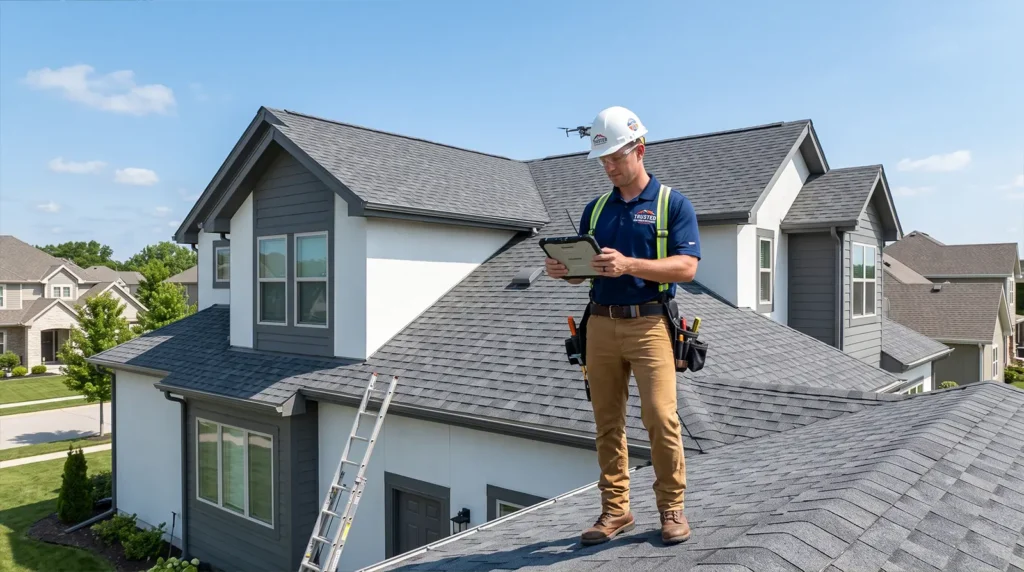
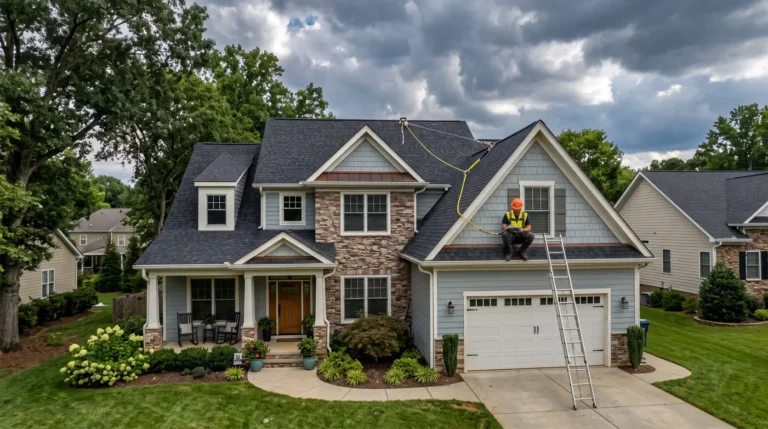
A roofing contractor can inspect the roofing system, photograph visible conditions, prepare a repair or replacement scope, and provide supporting documentation. The contractor does not decide whether a loss is covered; the insurance carrier makes that determination under the policy.
Professional Storm Damage Inspections in 28117 and 28601
Great State Roofing provides storm damage inspections, roof repair, roof replacement, emergency leak repair, hail damage evaluation, and insurance claim documentation support for homeowners and property owners throughout the Lake Norman and western Piedmont areas.
The company serves Mooresville, Hickory, Cornelius, Huntersville, Davidson, Charlotte, Sherrills Ford, Denver, and surrounding North Carolina communities.
Great State Roofing emphasizes quality workmanship, detailed assessments, clear communication, project updates, and manufacturer-approved installation practices. The company is a CertainTeed ShingleMaster Pro and GAF Certified Plus contractor and holds North Carolina Contractor License No. 81831.
Eligible roofing systems may include a 10-year workmanship warranty and manufacturer material warranty options of up to 50 years. Warranty availability and terms depend on the selected roofing system and proposal.
Schedule a Roof Inspection
A storm inspection can help determine whether your roof is performing as intended or whether repairs should be completed before another period of heavy rain.
For roofing service in Mooresville, NC 28117, Hickory, NC 28601, or a nearby community, contact Great State Roofing.
Great State Roofing
Phone:
Website: GreatStateRoof.com
Do not climb onto a damaged roof. When there is an active leak, fallen tree, electrical hazard, or structural concern, remain in a safe location and contact the appropriate emergency or utility service before arranging roofing work.
Frequently Asked Questions
Can hail damage a roof without causing an immediate leak?
Yes. Hail may damage the surface of a shingle or weaken the material without creating an opening that leaks immediately. Water intrusion may develop later as damaged materials age or are exposed to additional rain and wind.
Does a severe thunderstorm watch mean my roof was damaged?
No. A watch means atmospheric conditions were capable of producing severe storms across the designated area. It does not confirm damage at an individual address. A property inspection is needed to determine whether the roof was affected.
Should I inspect my roof myself?
Homeowners can inspect the property from the ground and check the attic or interior. Climbing onto the roof is not recommended, especially after wind, hail, or rain.
Should I contact a roofer or my insurance company first?
Either may be appropriate depending on the situation. A roofing inspection can help document visible conditions, while the insurance company explains policy requirements and determines coverage. Emergency steps should focus first on personal safety and preventing additional damage.
Very professional. Quality work. I would highly recommend for any roofing needs.

Matt V

