

Industrial Roof Insulation (7 Benefits for Cold Climates)
Posted 4.16.26 | 11 Minute Read
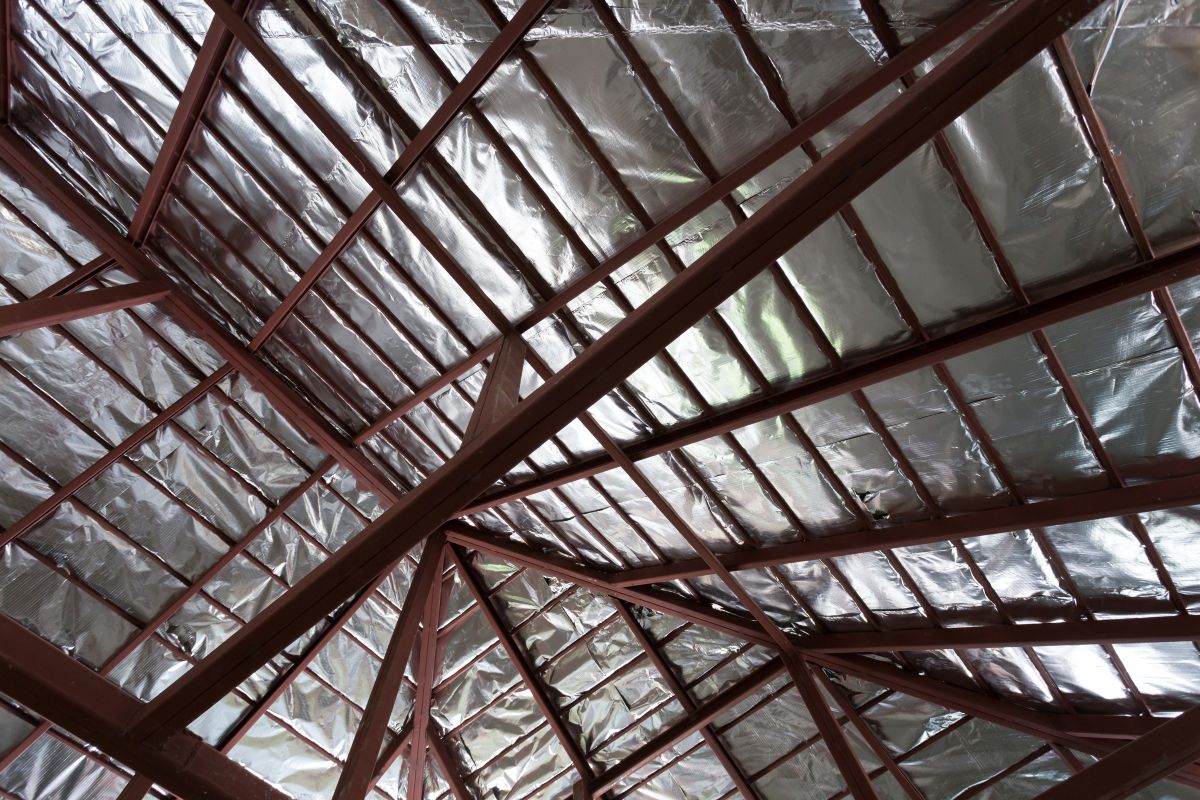
Cold weather is unforgiving to industrial buildings that are not properly prepared for it. Heat escapes through the roof faster than through any other part of the structure, energy bills climb without explanation, and interior temperature swings make working conditions difficult and equipment less reliable. Industrial roof insulation is one of the highest-impact upgrades an industrial property owner can make, and its benefits go far beyond just staying warm. For facility owners in the Rock Hill and surrounding areas looking to understand what a well-insulated roof actually delivers, learning how industrial roofing systems are built to handle cold-weather demands is the right place to begin.
Here is what you will learn in this guide:
- Why insulation performs differently on industrial roofs than in other building types
- The seven key benefits of proper industrial roof insulation in cold climates
- The most common insulation materials used in industrial roofing and how they compare
- How insulation interacts with your roofing membrane and overall building envelope
- Warning signs that your current insulation is underperforming
- What the installation process looks like and what to expect from a qualified roofing contractor
How Cold Climates Expose the Limits of Underinsulated Industrial Roofs

Industrial buildings present a unique insulation challenge. Large open floor plans, high ceilings, minimal interior wall mass, frequent loading dock door cycles, and significant internal heat generation from machinery all create conditions that stress the thermal envelope in ways that residential or smaller commercial buildings simply do not experience. In cold climates, these conditions combine to expose insulation deficiencies quickly and expensively.
When an industrial roof lacks adequate insulation or when existing insulation has degraded over time, the building loses conditioned air at a rate that forces heating systems to work constantly just to maintain baseline temperatures. In the Rock Hill and surrounding areas, where winters bring genuine cold snaps alongside unpredictable temperature swings, this constant thermal cycling takes a toll on both energy budgets and building components. The good news is that properly specified and installed insulation addresses all of these pressure points simultaneously.
Here is what adequate industrial roof insulation actually delivers for cold-climate facilities:
- Dramatically reduced heating costs: Heat rises, and an industrial roof with insufficient R-value is essentially a thermal escape hatch. Upgrading insulation is consistently one of the highest-return energy efficiency investments available to industrial property owners.
- Condensation control: When warm interior air meets a cold roof deck, condensation forms. Over time, this moisture degrades insulation, corrodes metal decking, and creates conditions for mold and structural deterioration. Proper insulation keeps the roof deck temperature above the dew point, preventing condensation from forming in the first place.
- Membrane protection: Roofing membranes that experience dramatic temperature swings expand and contract repeatedly, stressing seams, flashings, and field areas. A well-insulated roof deck moderates these swings and extends membrane service life significantly.
- Improved working conditions: Facilities where interior temperatures cannot be maintained reliably struggle with worker comfort, productivity, and in some cases, equipment or product sensitivity requirements that demand consistent climate control.
- Code compliance and insurability: Building energy codes have tightened considerably in recent years, and insurance carriers increasingly factor building envelope performance into their risk assessments. Adequate insulation keeps your facility compliant and may reduce insurance exposure.
7 Benefits of Industrial Roof Insulation in Cold Climates
Understanding insulation in the abstract is one thing. Seeing the specific ways it changes a facility’s performance in cold weather makes the investment case concrete. Each of the benefits below represents a real, measurable improvement that industrial property owners experience after upgrading from inadequate to properly specified insulation.
1. Significant Energy Cost Reduction
The relationship between roof insulation R-value and heating energy consumption is direct and well-documented. Every point of R-value improvement reduces the rate at which heat escapes through the roof assembly. For large industrial facilities with roof areas measured in tens of thousands of square feet, the cumulative energy savings from a proper insulation upgrade can be substantial enough to offset a significant portion of the installation cost within just a few years.
Factors that affect the energy savings calculation:
- Current insulation R-value versus target R-value after upgrade
- Facility operating hours and interior temperature requirements
- Local energy costs and the fuel type powering the heating system
- Whether the facility generates significant internal heat from equipment or processes
2. Condensation Prevention and Moisture Management
Condensation is one of the most destructive and least visible problems in industrial roofing. When warm, humid interior air contacts a cold roof surface, water vapor condenses into liquid. This moisture saturates insulation boards, reducing their thermal performance, promotes rust on steel roof decking, and creates the sustained moisture conditions that allow mold and biological growth to take hold inside the roof assembly.
Properly specified insulation places a thermal break between the warm interior air and the cold exterior, keeping the condensing surface above the dew point temperature. In facilities with high interior humidity from manufacturing processes, steam, or refrigeration cycling, vapor retarders installed in conjunction with insulation provide an additional line of defense.
3. Extended Roofing Membrane Lifespan
Industrial roofing membranes, whether TPO, EPDM, PVC, or modified bitumen, are designed to flex as temperatures change. What they are not designed to handle is constant, extreme thermal cycling between the heated interior and a cold exterior. Without adequate insulation buffering those temperature swings, seams are stressed repeatedly, flashings work loose, and field areas develop fatigue cracks earlier than they should.
A well-insulated roof assembly stabilizes the temperature environment the membrane experiences, reducing the mechanical stress of thermal expansion and contraction. For industrial property owners in Rock Hill and surrounding areas who have already invested in a quality membrane system, upgrading insulation is one of the most effective ways to protect that investment.
4. Noise Reduction
Industrial facilities often deal with significant exterior noise, whether from traffic, adjacent operations, or weather events like hail and heavy rain. Dense insulation boards, particularly polyisocyanurate and mineral wool products, provide meaningful sound attenuation through the roof assembly. This is an underappreciated benefit that improves interior working conditions and can matter significantly in facilities where communication, concentration, or product sensitivity is a factor.
5. Ice Dam Prevention

Ice dams form when heat escaping through an underinsulated roof melts snow on the upper portion of the roof, and that meltwater then refreezes at the cold roof edge. The resulting ice buildup blocks drainage, forces water under roofing materials, and can cause significant interior water intrusion. Proper insulation keeps the roof surface uniformly cold, meaning snow does not melt unevenly, and the conditions that create ice dams simply do not develop.
For flat and low-slope industrial roofs, the ice dam dynamic plays out at drains and scuppers rather than at a roof edge, but the underlying mechanism is the same. Insulation that maintains consistent temperatures across the roof surface keeps drainage points functioning properly through freeze-thaw cycles.
6. Enhanced Fire Resistance
Several industrial insulation materials, particularly mineral wool and certain polyisocyanurate products with appropriate facers, carry meaningful fire resistance ratings. For facilities that store or process flammable materials, or that must comply with specific fire code requirements, insulation selection that addresses fire performance as well as thermal performance is an important consideration. A qualified roofing contractor can help specify products that meet both thermal and fire rating requirements for your specific occupancy classification.
7. Increased Property Value and Tenant Attractiveness
For owners of industrial properties that are leased or may be sold in the future, a well-insulated building with documented energy performance is simply more valuable. Tenants increasingly factor energy costs into their occupancy decisions, particularly as industrial tenants face their own sustainability reporting requirements and energy cost pressures. A facility in Rock Hill and surrounding areas that can demonstrate low energy consumption per square foot commands stronger lease rates and attracts higher-quality tenants than a comparable building with an underperforming envelope.
Insulation Materials Used in Industrial Roofing: A Practical Comparison
Not all insulation products perform the same way, and the best choice for a given facility depends on the roof system, the climate, the interior conditions, and the budget. Here is a straightforward look at the materials most commonly used in industrial roofing applications.
Polyisocyanurate (Polyiso)
Polyiso is the most widely used insulation in commercial and industrial roofing. It offers the highest R-value per inch of any rigid board insulation, typically around R-6 per inch, which matters on roofs where assembly thickness is a constraint. Polyiso is compatible with most membrane systems and is available with a variety of facer options for different applications.
One important consideration: polyiso’s stated R-value is tested at 75 degrees Fahrenheit, and its thermal performance decreases in very cold temperatures. In cold climates, specifying a slightly higher R-value than the theoretical minimum, or using polyiso in combination with another insulation layer, compensates for this characteristic.
Expanded Polystyrene (EPS)
EPS, commonly recognized as rigid foam board, maintains its R-value more consistently across temperature ranges than polyiso, making it a strong performer in genuinely cold conditions. It is vapor-open, meaning it does not trap moisture within the board itself, and it is dimensionally stable over time. EPS is typically used as a base layer beneath polyiso or as the primary insulation in certain tapered insulation systems.
Extruded Polystyrene (XPS)
XPS offers higher compressive strength than EPS, making it the preferred choice for insulation applications where foot traffic, equipment loads, or ballasted systems place significant pressure on the insulation layer. It has a consistent R-value of approximately R-5 per inch and performs well in wet conditions, though its environmental profile has led some specifications to favor EPS or polyiso alternatives.
Mineral Wool (Rock Wool)
Mineral wool insulation is made from volcanic rock or slag and offers a combination of thermal performance, fire resistance, and sound attenuation that no other insulation product matches. It is non-combustible, retains its structure when wet, and does not support mold growth. For industrial facilities with fire performance requirements or high interior humidity, mineral wool deserves serious consideration despite its higher cost relative to foam board products.
Warning Signs That Your Current Industrial Roof Insulation Is Failing

Insulation does not fail all at once. It degrades gradually, and the signs of that degradation are often attributed to other causes before the insulation itself is identified as the problem. Knowing what to look for helps facility managers and property owners catch insulation issues before they compound into more expensive problems.
Unexplained increases in heating costs that do not correspond to changes in occupancy, equipment, or operating hours are often the first sign that insulation has degraded or been compromised by moisture infiltration.
Condensation on interior ceiling surfaces or visible rust on steel deck panels indicates that the thermal break the insulation is supposed to provide is no longer functioning effectively.
Soft spots or spongy areas on the roof surface detected during a walking inspection suggest that insulation boards beneath the membrane have absorbed moisture and lost their structural integrity. These areas typically require core cuts to confirm the extent of moisture infiltration.
Visible sagging or deflection of the roof membrane in localized areas can indicate that wet, compressed insulation is no longer supporting the membrane properly.
Interior temperature complaints from occupants or tenants in areas of the building directly below the roof, particularly in the coldest months, often point to localized insulation failures in those sections of the roof assembly.
If your facility in Rock Hill and surrounding areas is showing any of these signs, a professional roof inspection that includes a moisture survey is the appropriate next step before making any decisions about repair or replacement.
Make Your Industrial Roof Work Harder for Your Facility
Industrial roof insulation is not a glamorous topic, but it is one of the most consequential decisions a facility owner or manager makes when it comes to long-term operating costs, building performance, and asset value. In cold climates, a properly insulated roof is the difference between a building that works efficiently and one that fights against itself every winter.
At Great State Roofing, we understand the specific demands that industrial properties place on roofing systems, and we have the experience to specify and install insulation assemblies that deliver real, measurable results. Whether you are replacing an aging roof system, adding insulation over an existing assembly, or evaluating what your current roof is actually providing, our team brings the knowledge and craftsmanship to get it right.
If your facility is due for a closer look, contact us today to schedule a professional inspection and find out exactly how your current insulation is performing.

Very professional. Quality work. I would highly recommend for any roofing needs.

Matt V

