
Minimum Slope for a Metal Roof: Easy 2026 Guide
Posted 11.11.25 | 8 Minute Read
If you’re a homeowner in Rock Hill and surrounding areas thinking about upgrading to metal roofing, one question often comes up early in the process: what is the minimum slope for a metal roof? While it may sound like a small design detail, the slope of your roof determines whether a metal system will perform correctly, resist leaks, and last its full lifespan. In short, slope affects how well your roof protects your home.
Knowing this detail also helps you choose the right roofing style, panel type, and installation method. For homeowners exploring options, understanding slope requirements makes it easier to work with professionals who can design the right solution for your property. You can learn more about metal roofing performance and slope compatibility by visiting our metal roofing services page.
Here’s what you’ll learn in this guide:
- Why roof slope matters for the strength and durability of metal roofs
- The specific slope requirements for different types of metal roofing systems
- How to measure your roof’s slope at home or confirm it with a professional
- Key design and weather considerations for homes in Rock Hill and surrounding areas
- What steps to take if your roof doesn’t meet the ideal slope for metal panels
Why Roof Slope Matters More Than You Might Think

Many homeowners focus on the appearance and lifespan of metal roofing, but few realize how much the slope—or pitch—affects those qualities. The slope controls how fast water drains, how seams function, and how the entire system handles wind, rain, and debris. A roof installed at too shallow of a slope may not drain properly, allowing water to linger where it shouldn’t.
Understanding slope isn’t just about technical precision. It’s about preventing costly future repairs and protecting one of your biggest investments—your home.
Here are the top reasons slope matters:
- Water control and drainage: A roof with the proper slope allows rainwater to flow freely toward gutters, reducing the risk of standing water and corrosion.
- Leak prevention: The right slope helps protect seams and fasteners from water intrusion during heavy rainfall, which is important in Rock Hill’s humid climate.
- System longevity: Panels installed on the correct slope last longer because they experience less stress from pooled water and expansion.
- Warranty protection: Manufacturers require specific slopes for each panel type. If installation doesn’t meet those specifications, the warranty could be void.
- Energy efficiency: Slope affects how sunlight hits your roof. The right angle can reduce heat gain and improve attic ventilation, leading to better energy performance overall.
When you invest in a new metal roof, getting the slope right ensures you get every benefit your roofing system is designed to deliver.
4 Key Slope Guidelines for Metal Roofing Systems
Not all metal roofs are built the same. Different panel designs require different slopes to work properly. These guidelines help you understand the most common metal roofing systems and the slope ranges where each performs best.
1. Standing Seam Metal Roofs
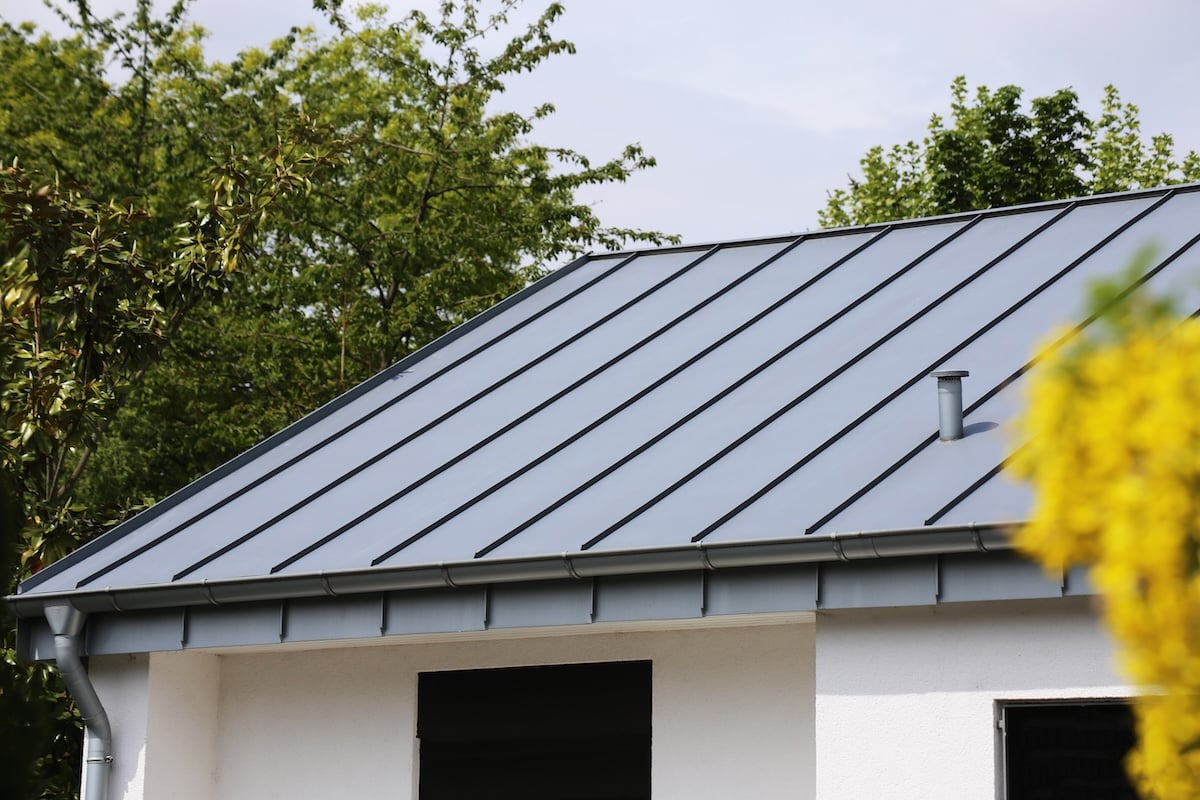
Standing seam systems are popular because of their clean look and superior weather protection. The raised seams prevent water from entering the joints between panels, making them suitable for low slopes. In most cases, these roofs can be installed on slopes as low as ¼:12, meaning the roof rises just a quarter inch for every 12 inches of horizontal run.
However, proper seam sealing and mechanical fastening are essential for these low slopes.
- Ideal for modern and contemporary home designs
- Excellent for large, uninterrupted roof areas
- Longest-lasting and most watertight of all metal systems
For Rock Hill homeowners with low-sloped roofs, standing seam is often the most practical and attractive choice.
2. Exposed-Fastener (Corrugated) Metal Roofs
Exposed-fastener panels, also known as screw-down or corrugated metal, are affordable and easy to install. But because the fasteners penetrate the panels and the seams overlap, they rely heavily on gravity to drain water.
These systems typically require a minimum slope of 3:12. Some manufacturers allow ½:12 if sealant is applied, but that’s rarely recommended in areas that experience heavy rainfall.
- Budget-friendly and durable
- Great for garages, sheds, and steep-sloped homes
- Require regular maintenance to check fasteners and prevent leaks
Exposed-fastener systems are best for moderate to steep rooflines where water drains quickly.
3. Metal Shingles and Decorative Metal Panels
Metal shingles replicate traditional roofing materials like slate, tile, or wood shake. While visually appealing, these systems depend on overlap rather than watertight seams, meaning they perform best on steeper slopes.
Most manufacturers recommend at least 3:12 for metal shingles to ensure proper water shedding.
- Excellent for traditional and Craftsman-style homes
- Enhances curb appeal and resale value
- Not suited for low slopes
If your home in Rock Hill has a steeper roof, metal shingles can offer beauty and durability with minimal upkeep.
4. Structural and Hydrostatic Metal Panels
Some commercial and specialty residential systems use hydrostatic or structural panels designed for extremely low slopes, even down to ¼:12. These systems use sealed seams and underlayment membranes to prevent leaks.
- Perfect for flat or nearly flat roof designs
- Require professional installation for proper sealing
- Typically found on modern or commercial-style homes
For homeowners with very shallow roof designs, structural standing seam or hydrostatic systems provide excellent long-term protection.
How to Check Your Roof’s Slope Before Choosing a Metal System

Before choosing a metal roofing style, it’s important to know your current slope. It’s a simple process, but accuracy matters. A small measurement error could result in choosing a system that doesn’t meet manufacturer requirements.
Step 1: Measure the Rise and Run
The slope of your roof is the amount it rises vertically over 12 inches of horizontal distance. You can measure it using a level and a tape measure.
- Place the level horizontally on the roof surface.
- Measure vertically from the roof surface up to the level at the 12-inch mark.
- The number of inches between the roof and level equals the slope (for example, a 4-inch rise equals a 4:12 slope).
If your roof is hard to access safely, contact a professional to take the measurement.
Step 2: Compare Your Slope to System Requirements
Once you have the measurement, compare it to the panel requirements. If your roof’s slope is lower than the recommended minimum, you’ll need either a sealed standing seam system or adjustments to your roof structure.
- Standing seam: ¼:12 or greater
- Exposed fastener: 3:12 or greater
- Metal shingles: 3:12 or greater
Step 3: Evaluate Your Roof’s Condition
During a slope check, it’s smart to assess your roof’s overall condition. Look for soft decking, rot, or structural dips that could affect drainage. Even a well-designed slope won’t perform properly if water can’t move freely off the roof.
Step 4: Plan for Drainage and Flashing
Low-slope roofs require special flashing and underlayment. If your slope is near the minimum, these details become even more important. A properly flashed and sealed roof can handle water flow without leaks or pooling.
Step 5: Consult a Local Roofing Professional
Because every home is different, the best next step is to have an expert inspection. A professional roofer can confirm slope, identify potential drainage issues, and recommend a metal roofing system that meets both code and warranty standards.
Local Design and Weather Considerations for Rock Hill Homes
Your local climate plays a big role in roof performance. In Rock Hill and surrounding areas, homeowners deal with humid summers, frequent rain, and the occasional winter freeze. Those conditions make slope and water drainage especially important.
Here are a few key considerations for our region:
- Rainfall and humidity: The Southeast experiences frequent rainstorms. Proper slope prevents water buildup that can cause rust or mold.
- Wind and debris: Strong gusts can push water under panels if the slope is too shallow. Low-profile, mechanically seamed panels resist wind uplift better.
- Tree cover: Many Rock Hill homes sit under large trees. Leaves and pine needles can collect in valleys or low-slope sections, so having the right slope and regular maintenance prevents clogging.
- Sun exposure: A properly angled roof can reflect sunlight effectively, lowering attic temperatures and improving energy efficiency.
Choosing a metal roof suited for Rock Hill’s weather ensures better protection, reduced maintenance, and long-term savings.
Cost, Longevity, and Aesthetic Factors to Consider

The slope of your roof doesn’t just affect performance—it can also influence cost and appearance. Each system has its pros and cons, depending on your home’s design and budget.
| Metal Roof Type | Minimum Slope | Lifespan (Approx.) | Aesthetic Style | Maintenance Level |
| Standing Seam | ¼:12 | 40–60 years | Modern, sleek | Low |
| Exposed Fastener | 3:12 | 30–45 years | Traditional, rustic | Moderate |
| Metal Shingles | 3:12 | 40–70 years | Classic, high-end | Low |
| Hydrostatic Panels | ¼:12 | 50+ years | Contemporary, flat roof | Low |
When choosing between these systems, balance three priorities: functionality, appearance, and long-term value. In many cases, investing in a higher-quality system like standing seam pays off through decades of reliable performance and minimal repairs.
Ready to Choose the Right Metal Roof for Your Home?
Understanding the minimum slope for a metal roof helps you make smarter decisions about materials, cost, and design. Whether your home has a low slope or a steep pitch, there’s a system that will perform beautifully and protect your property for decades. The key is matching the right panel type to your specific roof.
If you live in Rock Hill or surrounding areas, Great State Roofing is here to help. Our experienced team will measure your slope, evaluate your roof’s structure, and recommend the best metal system for long-term performance. To learn more or schedule an inspection, contact us today and let Great State Roofing deliver a roof that’s built for your home, your budget, and your future.
Very professional. Quality work. I would highly recommend for any roofing needs.

Matt V

