
Alternative To Asphalt Roofing (6 Better Options For 2026)
Posted 5.28.26 | 12 Minute Read
Asphalt shingles dominate the residential roofing market because they are affordable, widely available, and familiar to nearly every contractor in the country. But familiarity is not the same as being the best fit for every home and every homeowner. For those willing to look past the default, the market for roofing materials has expanded significantly, and the options available today address the specific limitations that lead homeowners to start searching for an alternative to asphalt roofing in the first place: shorter lifespan, recurring replacement costs, environmental concerns, and performance gaps in high-wind and high-heat conditions. Homeowners in the Huntersville and surrounding areas who want to understand what the full landscape of residential roofing options actually looks like will find the alternatives compelling.
Here is what you will learn in this guide:
- Why homeowners are increasingly looking beyond asphalt for their roofing projects
- The six strongest alternative roofing materials available in 2026
- How each alternative compares to asphalt on cost, performance, lifespan, and maintenance
- Which alternatives work best for specific home styles and climate conditions
- How to evaluate contractor experience and availability for non-asphalt materials
- What the true lifecycle cost looks like for each option when replacement cycles are factored in
Why More Homeowners Are Moving Beyond Asphalt Shingles

The case against asphalt shingles is not that they are a bad product. For many homeowners, asphalt is a perfectly reasonable choice and the most financially sensible option given their circumstances. The case for exploring alternatives is that asphalt shingles have real limitations that matter more to some homeowners than to others, and those homeowners deserve to know what else is available.
The most common reasons homeowners in the Huntersville and surrounding areas start researching alternatives include dissatisfaction with the 20 to 25 year replacement cycle that standard architectural shingles typically deliver, concern about asphalt’s environmental footprint and the landfill waste it generates at replacement time, interest in better energy performance and solar reflectance, and a desire for a roof that makes a more distinctive visual statement than what asphalt shingles can deliver. Each of these motivations leads toward a different set of alternatives, and understanding which motivation is driving your search points toward the right comparison.
Here is what moving beyond asphalt can deliver for the right homeowner:
- Dramatically longer service life: Every alternative in this guide outlasts standard asphalt shingles by at least a decade, with several offering service lives two to four times longer. This matters most for homeowners with long ownership horizons who want to install a roof once and be done.
- Reduced lifetime replacement cost: A material that costs more upfront but lasts twice as long without significant maintenance or replacement eliminates the second full roofing project that asphalt typically requires over a 40-year ownership period.
- Environmental footprint reduction: Asphalt shingles generate significant landfill waste at end of life. Alternatives including metal, tile, and slate either last far longer between replacements or are recyclable, meaningfully reducing the environmental impact of the roofing decision.
- Performance advantages in specific conditions: Metal outperforms asphalt in wind and heat resistance. Tile outperforms asphalt in fire resistance and thermal mass. Synthetic options outperform asphalt in impact resistance per weight of material. These specific performance differences matter more in some climates and locations than others.
- Curb appeal and resale differentiation: A home with a standing seam metal roof, a clay tile roof, or a genuine slate roof stands out in a market where the majority of comparable homes have standard asphalt, and that differentiation can support stronger listing prices and buyer interest.
6 Better Alternatives to Asphalt Roofing in 2026
Each of the six alternatives below offers a genuine improvement over standard asphalt across at least one meaningful dimension, and several offer improvements across multiple dimensions simultaneously. Understanding what each one delivers, and where its limitations lie, allows homeowners to narrow the field to the options that fit their specific situation.
1. Standing Seam Metal Roofing
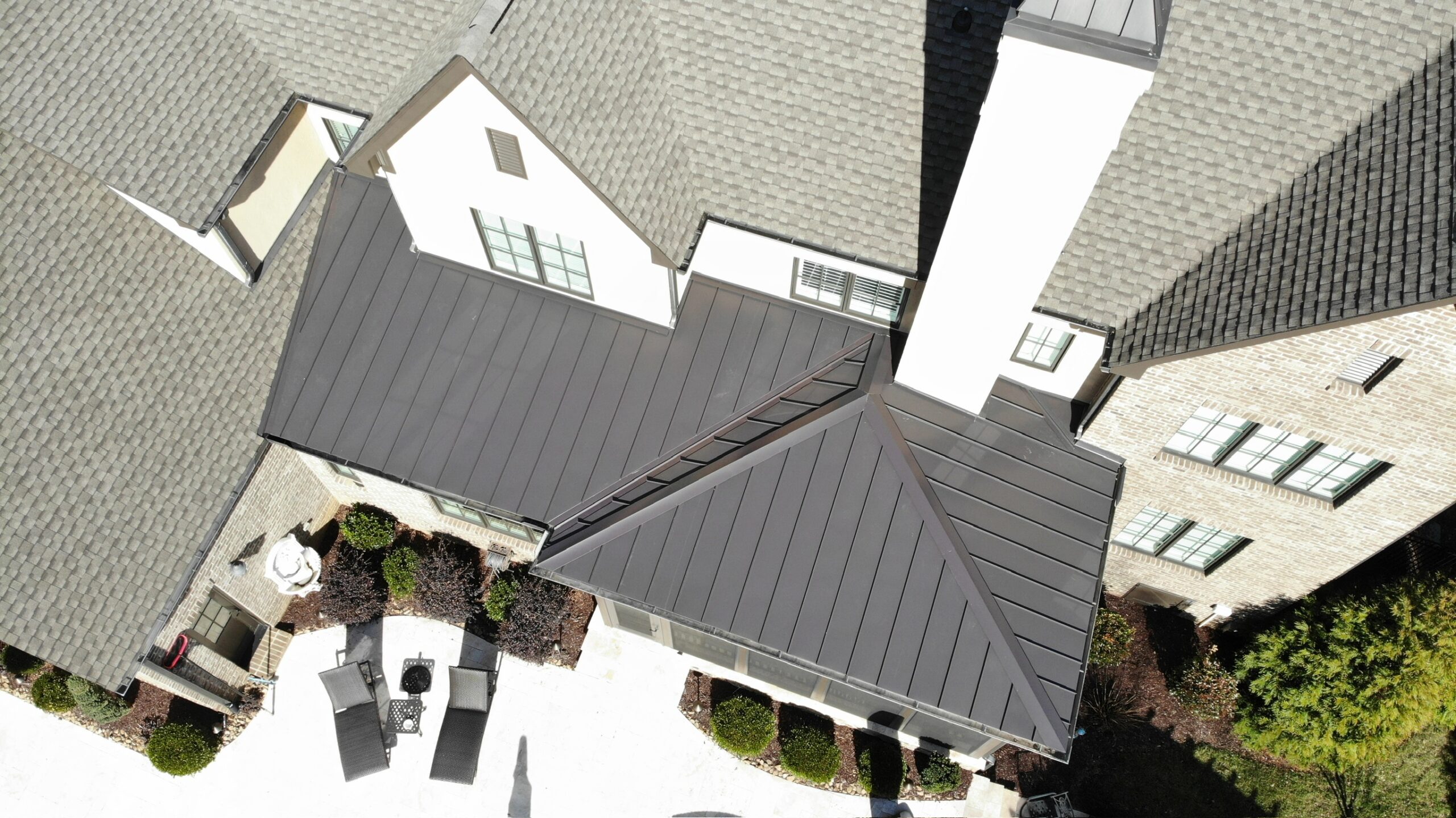
Standing seam metal roofing is the most widely adopted alternative to asphalt shingles for residential applications, and the breadth of its advantages makes clear why. Panels interlock at raised seams that stand above the roof surface, keeping water away from any connection point in the system. Concealed fasteners eliminate exposed hardware that could corrode or back out over time. And PVDF coating systems like Kynar 500 protect the finish from UV-induced fading for 30 to 40 years under manufacturer warranty.
The service life expectation for a properly installed standing seam metal roof is 40 to 70 years, with minimal maintenance beyond periodic inspection of sealants at penetrations and keeping gutters clear. For homeowners in the Huntersville and surrounding areas who experience significant summer storms, the wind resistance ratings of standing seam systems, often 140 mph or higher, represent a genuine performance upgrade over asphalt.
What to know before choosing standing seam:
- Installed cost is typically $8 to $15 per square foot, two to three times the cost of standard asphalt
- A wide range of colors and profiles is available, making it compatible with most residential architectural styles
- Contractor experience with metal installation specifically matters significantly, since improper installation undermines the system’s performance advantages
- Financing options have become much more accessible and can reduce the upfront cost barrier substantially
2. Metal Shingles and Metal Tiles
For homeowners who want the performance advantages of metal roofing but prefer the visual profile of a traditional shingle or tile roof, metal shingles and metal tile products offer a compelling middle ground. These products use the same metal substrate and coating technology as standing seam but are shaped to replicate the appearance of wood shake, slate, clay tile, or standard shingles at a visual scale that reads as traditional rather than industrial.
Metal shingles are installed similarly to asphalt shingles in terms of the nailing and overlap pattern, but with the interlocking design and coated metal substrate that delivers far better performance. They are particularly popular among homeowners whose neighborhoods or HOAs have aesthetic expectations that standing seam profiles do not meet.
Key performance characteristics:
- Class 4 impact ratings are available on many metal shingle products, qualifying for insurance discounts in most states
- Lighter weight than tile alternatives makes them structurally compatible with homes that could not support heavier roofing materials
- Color retention warranties match those of standing seam products, typically 30 to 40 years for PVDF-coated systems
- Installation requires contractors with specific experience in metal shingle systems, which varies more by market than standing seam experience
3. Concrete and Clay Roof Tile

Roof tile has been a standard roofing material in warm climates for centuries, and its persistence is a reflection of genuine performance advantages that have proven durable across generations of use. Clay tile offers excellent thermal mass that moderates interior temperature swings, outstanding fire resistance, and a service life expectation of 50 years or more under normal conditions. Concrete tile delivers similar performance at a lower price point, though with somewhat shorter warranty periods and a heavier weight that requires structural verification before installation.
The most significant limitation of tile roofing is weight. Clay tile can weigh 600 to 1,000 pounds per square, and concrete tile is similarly heavy. Many homes built with standard residential framing for asphalt shingles require structural reinforcement to support tile, which adds cost and complexity that must be evaluated before tile is considered a realistic option for a specific home.
Best applications for tile roofing:
- Mediterranean, Spanish Colonial, Southwestern, and similar architectural styles where tile is an expected and authentic material choice
- Homes in hot, dry climates where tile’s thermal mass and fire resistance deliver the most meaningful performance advantages
- New construction or major renovation projects where structural requirements can be addressed in the design phase rather than as retrofit additions
4. Synthetic Roofing Materials
Synthetic roofing products have matured considerably in recent years, and the best products in this category now deliver a compelling combination of performance, aesthetics, and value that was not available from earlier synthetic materials. Made primarily from engineered polymers, recycled plastics, and rubber compounds, synthetic roofing products replicate the appearance of slate, wood shake, clay tile, and other premium materials while delivering Class 4 impact resistance, significantly lower weight than natural materials, and resistance to the moisture absorption and biological growth that affects natural wood and slate.
For homeowners who want the look of slate or wood shake without the structural demands, the installation complexity, or the maintenance requirements of the natural materials, high-quality synthetic alternatives represent a genuinely attractive option in 2026.
What distinguishes quality synthetic products:
- UV stabilizers that maintain color and structural integrity over extended UV exposure are critical since inferior synthetic products can fade, become brittle, or lose shape over time
- Class 4 impact ratings are achievable with quality polymer formulations and should be a minimum specification for any synthetic product considered
- Manufacturer warranty terms and company longevity are important considerations since synthetic roofing warranties only have value if the manufacturer is still in business to honor them
- Weight is typically comparable to or lower than asphalt shingles, making synthetic materials structurally compatible with virtually all residential framing without structural modification
5. Natural Slate Roofing
Natural slate is the benchmark against which every other premium roofing material is measured, and it earns that status through genuinely exceptional performance. A natural slate roof installed correctly can last 75 to 150 years, with historical examples of slate installations lasting considerably longer on well-maintained structures. Its fire resistance is Class A. Its appearance is unmistakably distinctive and carries the visual authority that comes from centuries of use on some of the most admired buildings in the world.
The limitations of natural slate are equally significant and must be evaluated honestly before it is selected. Weight, at 800 to 1,500 pounds per square, requires structural verification and often reinforcement. Installation requires skilled specialty craftspeople who are not available in every market. Individual broken slates must be replaced carefully to avoid damaging surrounding slates, and finding matching replacement slate from the same geological source can be difficult as the original quarry ages or closes.
Natural slate is the right choice for homeowners who have the structural capacity, the budget, access to experienced slate installers, and a genuine long-term ownership horizon where the 75 to 150-year service life delivers value rather than simply representing an overinvestment relative to the ownership period.
6. Wood Shake and Wood Shingles
Wood shake and wood shingles occupy a unique position in the roofing alternatives landscape. They deliver the warmth, texture, and organic character that no manufactured product fully replicates, and on homes where that aesthetic is the defining design goal, no alternative truly substitutes. Cedar shake and shingle roofs have service lives of 25 to 40 years in appropriate climates with proper maintenance, which places them at the upper end of asphalt performance while delivering an appearance that asphalt cannot match.
The limitations of wood roofing are real and have caused its market share to decline in many regions. Fire resistance is poor without treatment, and treated wood products require periodic re-treatment to maintain that protection. Biological growth including moss, algae, and rot is an ongoing maintenance challenge that requires consistent attention in humid climates. And in fire-prone regions, many jurisdictions restrict or prohibit wood roofing regardless of treatment.
For the right home in the right climate with a homeowner committed to active maintenance, wood shake is a distinctive and beautiful material choice. For homeowners who want the wood shake aesthetic without the fire risk and maintenance demands, high-quality synthetic shake products now offer a compelling alternative to the natural material itself.
Matching the Right Alternative to Your Specific Situation

Understanding the alternatives is only the first step. Matching the right one to a specific home, climate, budget, and ownership timeline requires working through a set of decision factors that are unique to each situation.
Structural Capacity
Before any heavy roofing material is seriously considered, a structural assessment of the home’s framing is essential. Tile, slate, and some heavier synthetic products require framing that can support loads well above what asphalt shingles demand. This assessment is not optional, and skipping it leads to either structural problems after installation or the expensive discovery mid-project that reinforcement is required.
Contractor Availability and Experience
Some alternatives, particularly natural slate and specialty metal systems, require contractors with specific training and experience that is not uniformly available in every market. In regions where only a handful of contractors have genuine experience with a specific material, the risk of poor installation undermines the performance advantages the material offers. Verify actual installed project references before committing to a contractor for any non-standard roofing material.
Climate-Specific Performance Priorities
Metal roofing’s wind resistance advantage matters most in storm-prone regions. Tile’s thermal mass benefits are most significant in hot, dry climates with large day-night temperature differentials. Slate’s longevity advantage is most fully realized in moderate climates where freeze-thaw cycling is less pronounced. Matching the material’s specific performance strengths to the climate conditions your home actually faces produces better long-term outcomes than selecting based on aesthetics alone.
HOA and Neighborhood Compatibility
Some neighborhoods, particularly those governed by homeowner associations, have restrictions on approved roofing materials or colors. Before investing significant time in evaluating alternatives, confirm that the materials under consideration are permitted by any applicable covenants or local regulations. This is especially relevant for more distinctive choices like standing seam metal or clay tile in neighborhoods with predominantly traditional asphalt roofs.
Find the Right Roofing Material for Your Home
Asphalt shingles will continue to be the right choice for many homeowners, and there is no reason to choose an alternative simply for the sake of being different. But for homeowners whose specific situation, priorities, or performance requirements align with what the alternatives deliver, 2026 offers a better range of options than has ever been available.
At Great State Roofing, we work with homeowners throughout the Huntersville and surrounding areas to evaluate roofing options honestly and install the material that genuinely fits each home and situation. We install metal roofing, synthetic materials, tile, and asphalt, and we bring the same commitment to quality craftsmanship to each one.
If you are ready to explore what your options actually look like for your specific home, contact us today to schedule a consultation and get a clear picture of what each material would mean for your roof, your budget, and your long-term plans.
Very professional. Quality work. I would highly recommend for any roofing needs.

Matt V

