

Asphalt Roofing Cement (7 Uses, Benefits & Tips For 2026)
Posted 5.26.26 | 13 Minute Read
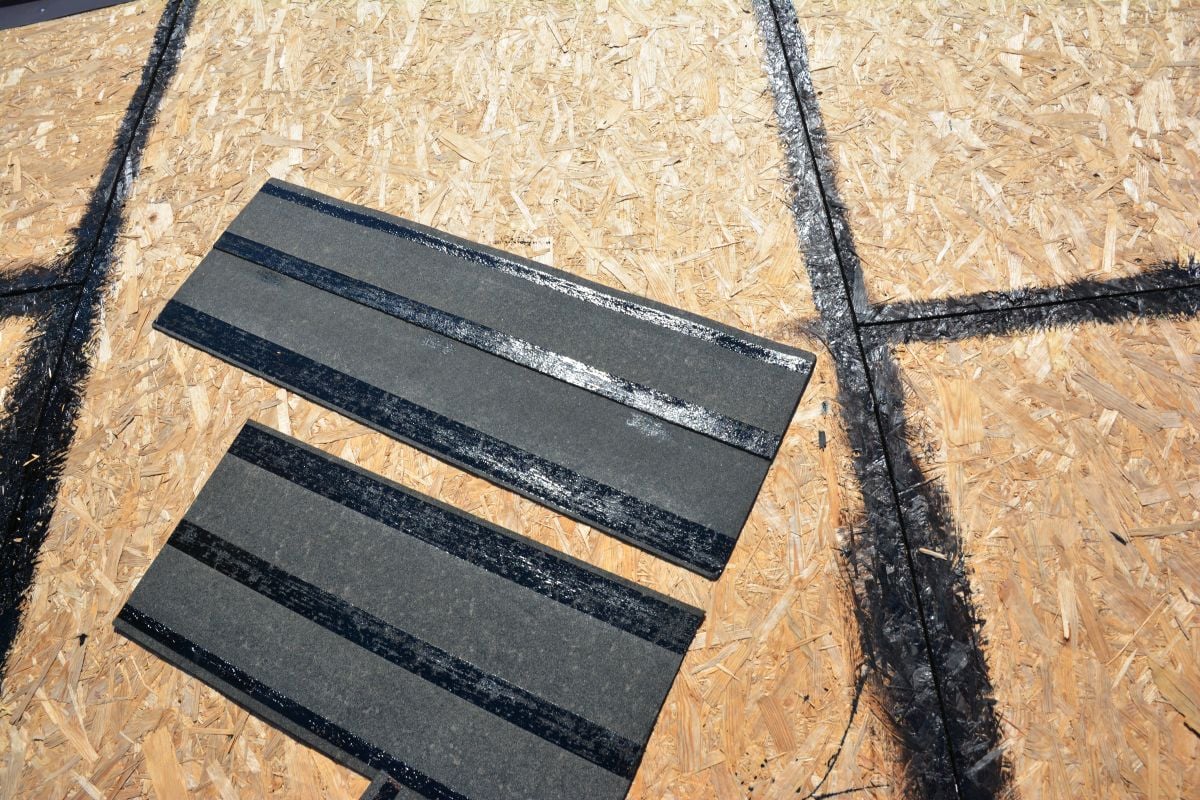
There is a product sitting in the inventory of virtually every roofing contractor that most homeowners have never thought about, even though it is responsible for sealing some of the most leak-prone areas of their roof. Asphalt roofing cement is a thick, waterproof adhesive compound made from asphalt and fibrous reinforcements that serves as both a sealant and a bonding agent across a wide range of roofing applications. It is not a glamorous product, but it is one of the most useful tools in residential roofing repair and maintenance. Homeowners who want to understand what keeps a residential roofing system sealed and watertight at every vulnerable point will find asphalt roofing cement at the center of that answer.
Here is what you will learn in this guide:
- What asphalt roofing cement is made from and how it works as a sealant and adhesive
- The seven most practical uses for asphalt roofing cement on residential roofs
- How to choose the right type of roofing cement for each specific application
- Best practices for application that determine whether repairs hold long-term or fail prematurely
- Common mistakes homeowners make with roofing cement and how to avoid them
- When roofing cement is the right repair tool versus when a more comprehensive fix is needed
What Asphalt Roofing Cement Is and Why It Matters

Asphalt roofing cement is not the same product as roofing caulk, lap sealant, or roofing tar, though these terms are sometimes used interchangeably in casual conversation. Roofing cement is a heavy-bodied compound that contains asphalt as its primary waterproofing component, combined with mineral stabilizers, solvents, and fibrous reinforcements that give it body, adhesion, and the ability to bridge small gaps and cracks in roofing materials. Its consistency ranges from a thick paste to a trowel-grade compound depending on the formulation and its intended application.
The fibrous reinforcement in roofing cement is one of its most important characteristics. Those fibers, typically fiberglass or organic materials, prevent the cement from cracking or becoming brittle as it cures and ages, and they provide tensile strength across any gap or seam the cement bridges. This reinforcement is what separates roofing cement from simpler sealants and what makes it appropriate for structural bonding applications as well as pure waterproofing. For homeowners in the Matthews and surrounding areas handling their own minor roof repairs, understanding this distinction helps ensure the right product gets chosen for the right job.
Here is why asphalt roofing cement remains an essential product in residential roofing in 2026:
- Immediate waterproofing: Properly applied roofing cement creates a waterproof bond almost immediately upon application, making it one of the most reliable tools for emergency repairs that need to stop water infiltration before a permanent fix can be scheduled.
- Versatile adhesion: Roofing cement bonds effectively to asphalt shingles, metal flashings, felt underlayment, modified bitumen, wood decking, and masonry, making it applicable across virtually every material category found on a residential roof.
- Flexibility after cure: Quality roofing cement remains flexible after curing rather than becoming rigid and brittle, allowing it to accommodate the thermal movement that roofing materials experience through seasons without cracking away from the surfaces it seals.
- Long shelf life and availability: Roofing cement is widely available at hardware and home improvement retailers, stores well when properly sealed between uses, and is ready to apply without mixing or special preparation in most formulations.
- Cost efficiency for targeted repairs: A can of roofing cement costs a fraction of what even a small professional repair call costs, and for homeowners comfortable with basic maintenance, it enables effective DIY repairs on appropriate applications that would otherwise require a service call.
7 Practical Uses for Asphalt Roofing Cement in 2026
Roofing cement is a multi-purpose product, but it performs best when it is used for the right application in the right conditions. These seven uses represent the situations where roofing cement genuinely earns its place in a homeowner’s maintenance toolkit and where proper application produces repairs that hold up over time.
1. Sealing Lifted or Loose Shingle Edges
Wind events frequently lift the lower edges and corners of asphalt shingles, particularly on roofs where the self-sealing strip has aged past its effective adhesion period. A lifted shingle edge that is not re-secured creates a pathway for wind-driven rain to enter beneath the shingle and reach the underlayment, and in high-wind events, the lifted area can catch and cause the shingle to tear free entirely.
Applying a small amount of roofing cement under the lifted edge and pressing the shingle flat is one of the most straightforward and effective repairs a homeowner can make. Apply the cement with a putty knife or caulking gun, spread it evenly across the lifted area, press the shingle firmly into contact, and weight it or tape it until the cement sets.
Best practice notes:
- Apply only enough cement to create a thin, even bond layer rather than a thick buildup that prevents the shingle from lying flat
- Allow the cement to set in moderate temperatures rather than applying in extreme cold, where adhesion may be compromised before the bond develops
- Check surrounding shingles for similar lifting after any significant wind event, since the same conditions that lifted one edge typically affect the area
2. Flashing Repair and Re-Sealing
Flashings at chimneys, skylights, wall transitions, and pipe penetrations rely on a combination of metal lapping and sealant to create a watertight seal at every edge and transition. The sealant component of a flashing installation ages and must be periodically renewed, and roofing cement is one of the most reliable products for this application.
When caulk or sealant at a flashing edge cracks, shrinks, or separates from the metal or the surrounding roofing material, applying roofing cement over the compromised area creates a waterproof bridge that seals the gap and prevents water from tracking behind the flashing. For step flashings along dormers or additions, roofing cement applied under the flashing edge and over the joint between the flashing and the surrounding shingles reinforces the connection against wind uplift and water infiltration.
Application considerations for flashing work:
- Clean the surfaces to be bonded of loose debris, old sealant, and any oxidation before applying cement to ensure maximum adhesion
- Apply cement in a continuous bead or spread without gaps that would allow water infiltration along the sealed edge
- On metal flashings, ensure the cement is compatible with the metal type, as some solvent-based formulations can affect certain coatings over time
3. Patching Small Holes and Punctures

Small holes or punctures in an asphalt shingle surface, from nail pops, impact damage, or installation errors, can be effectively sealed with roofing cement as a repair that restores waterproof integrity without requiring full shingle replacement. The repair is most appropriate for isolated small holes in an otherwise sound shingle and less appropriate for large tears or areas of significant damage.
To patch a small hole:
- Clean the area around the hole to remove loose granules and debris
- Apply a small amount of roofing cement directly into and over the hole, feathering the edges to create a smooth transition with the surrounding shingle surface
- If the hole is large enough to require bridging, embed a piece of aluminum flashing mesh or a fabric reinforcement patch in the cement before applying a finishing coat over the top
Patches made with roofing cement on shingle surfaces are most effective as repairs on roofs with remaining service life. On older roofs where the shingles are generally degraded, patching individual holes delays rather than prevents the need for replacement.
4. Setting Replacement Shingles
When installing replacement shingles to match damaged areas, roofing cement serves as the adhesive that bonds the new shingle to the surrounding shingles and to any exposed underlayment in the repair area. This is particularly important for the leading edge of the replacement shingle and for the area beneath the shingle tabs that must bond to the course below it to replicate the sealing function of the self-sealing strip on a new shingle.
Apply roofing cement in spots or a thin spread pattern rather than full coverage across the entire contact area. Full coverage creates a rigid bond that prevents the natural slight movement of shingles under thermal cycling and can lead to cracking along the cement boundary if the repair area is not allowed any flex. Spot application at the corners and along the lower edge of each course tab provides the necessary adhesion while preserving some flexibility.
5. Repairing Valleys
Valley areas channel the highest volume of water of any section of the roof surface and are among the most common locations for leak development as flashings age and shingle edges at valley boundaries lift or crack. Roofing cement applied along the valley edges where shingles terminate against open metal valley flashing, or along hairline cracks that develop in the valley center of closed valleys, reinforces the water barrier at these high-traffic water flow areas.
For open metal valley repairs in the Matthews and surrounding areas where summer storm runoff is significant, roofing cement applied over any rust spots, pin holes, or edge separations in the valley metal can extend the valley’s performance life until a full valley replacement is warranted during the next major roofing project.
6. Sealing Around Roof Penetrations
Every penetration through a residential roof, vent pipes, exhaust fans, electrical conduits, and satellite dish mounts, is a potential leak point where the seal between the penetration and the surrounding roofing material requires periodic renewal. Roofing cement applied around the base of penetration flashings and over any gaps in the boot or collar that seals the penetration reinforces the waterproof barrier at these locations.
Pipe boot flashings, which seal around vent pipes, are particularly prone to cracking at the rubber collar as the material ages and loses flexibility. Applying roofing cement over a cracked pipe boot collar, while not a permanent substitute for boot replacement, effectively extends its service life until a more comprehensive repair is scheduled.
7. Emergency Temporary Repairs After Storm Damage
When storm damage creates an immediate leak risk and weather or scheduling does not permit a permanent repair right away, roofing cement is one of the best tools available for creating a temporary seal that protects the interior until proper repairs can be made. Applied to a torn shingle edge, a displaced flashing, or a small area of exposed underlayment, roofing cement creates a waterproof barrier that holds up through multiple rain events when it is applied correctly and in adequate quantity.
Emergency temporary repairs should be documented photographically both before and after the cement application, particularly if the damage may support an insurance claim. The temporary repair should be clearly noted as such, and a permanent repair should be scheduled as promptly as possible, since roofing cement applied to large areas or over extensive damage is not a substitute for proper repair materials installed correctly.
Choosing the Right Type of Roofing Cement for Each Job
Not all roofing cement products are the same, and selecting the right formulation for each application affects both how the repair goes during application and how well it holds up over time. Here is a practical breakdown of the main product categories.
Fibered vs. Non-Fibered Roofing Cement
Fibered roofing cement contains reinforcing fibers, typically fiberglass, that add tensile strength and bridging capability across gaps. It is the appropriate choice for most repair applications, particularly anywhere a gap needs to be bridged or where the cement will be exposed to physical stress from thermal movement or wind. Non-fibered cement is smoother and more workable but has less strength across gaps. It is appropriate for thin coating applications and for situations where a very smooth finish is important.
Trowel-Grade vs. Caulk-Tube Formulations
Trowel-grade roofing cement comes in cans and is applied with a putty knife or trowel. It is better suited for applications requiring coverage over a significant area and where a thick application is appropriate. Caulk-tube formulations are more convenient for precise application in tight locations, along flashing edges, and for small-area repairs where a trowel would be impractical. Caulk-tube formulations are also easier to control for homeowners who do not use roofing cement frequently enough to develop proficiency with trowel application.
Wet-Surface vs. Standard Formulations
Standard roofing cement requires a clean, dry surface for optimal adhesion. Wet-surface or all-weather formulations are designed to bond even to surfaces that are damp or that cannot be dried before the repair must be made. These products are specifically useful for emergency repairs during active weather events or in situations where the roof cannot be allowed to dry before protection is needed. They typically cost more than standard formulations but provide critical performance in conditions where standard products would fail to bond effectively.
Common Application Mistakes That Cause Roofing Cement Repairs to Fail

Roofing cement is a forgiving product in many ways, but certain application errors consistently undermine otherwise reasonable repair attempts. Understanding these mistakes before starting a repair improves the outcome significantly.
- Applying over dirty or loose surfaces: Roofing cement bonds to the material beneath it, and if that material is covered in loose granules, dust, or old sealant, the bond forms to the loose material rather than to the substrate. Clean the repair area thoroughly before any cement application.
- Applying too thick in a single coat: Very thick applications of roofing cement can skin over on the surface while remaining soft underneath for extended periods, and they are more prone to cracking at the surface as they cure. Multiple thinner applications with time for partial curing between coats produce a more stable and durable result than a single heavy application.
- Applying in cold temperatures without the right product: Standard roofing cement becomes difficult to work with and bonds poorly in temperatures below 40 degrees Fahrenheit. Cold-weather or low-temperature formulations are available and should be used for any repair made in cold conditions.
- Using roofing cement where a different product is needed: Roofing cement is appropriate for the applications described in this guide, but it is not a substitute for properly installed replacement shingles, correctly lapped and fastened metal flashings, or a properly designed drainage system. Using cement to address problems that require structural repair only delays and potentially complicates the proper repair.
- Not protecting the repair from foot traffic during curing: Fresh roofing cement remains soft and sticky until it cures, which can take 24 to 72 hours depending on temperature and application thickness. Walking on or placing equipment over fresh cement tears the repair away from the substrate before the bond has developed.
Know When to Reach for Roofing Cement and When to Call a Professional
Asphalt roofing cement is a genuinely useful product for the homeowner who wants to maintain their roof between professional service visits and address minor issues before they develop into larger problems. It is most effective in the hands of someone who understands both what it can accomplish and where its appropriate applications end.
At Great State Roofing, we work with homeowners throughout the Matthews and surrounding areas who take their roof seriously and want to understand what their system needs to perform well year after year. Whether you have a repair that needs professional attention, want a thorough assessment of your roof’s current condition, or simply want honest guidance on what can be handled with a can of roofing cement and what requires a contractor, our team is here to give you a straight answer.
Your roof deserves the right repair for each situation. Contact us today to schedule a professional inspection and make sure every part of your roofing system is getting the attention it needs.


Very professional. Quality work. I would highly recommend for any roofing needs.

Matt V

